



Removing a broken spark plug requires patience, penetrating oil, and a specialized spark plug extractor tool. By applying steady counter-clockwise pressure, you can back the broken piece out of the engine block without ruining the delicate cylinder head threads. If the plug is seized tight, heating the engine block slightly or using a professional mechanic is the safest backup plan.
You are working in your garage. The sun is shining. You have a socket wrench in your hand. You are doing a simple spark plug change. Suddenly, you hear a loud snap. Your heart sinks. The metal top of the spark plug is in your socket. The threaded bottom is still stuck deep inside your engine cylinder head.
It is a classic DIY nightmare. It happens to the best of us. You might feel a wave of panic. Your mind starts racing. You might ask yourself, “How do I remove a broken spark plug without ruining my entire engine?” Do not worry. Your car is not ruined. You can still fix this in your own driveway.
This guide will walk you through the entire process. We will cover why these plugs break. We will look at the exact tools you need. Then, we will give you a clear, step-by-step extraction guide. You can get your car back on the road safely. Let us dive in.
Key Takeaways
- Use penetrating oil: Soak the broken plug in a high-quality rust penetrant for at least 30 minutes to loosen rust and carbon buildup.
- Get the right tool: A specialized easy-out or tapered spark plug extractor is essential for a safe, damage-free removal.
- Work with a cold engine: Aluminum cylinder heads expand when hot, which can cause the threads to strip much more easily.
- Apply steady pressure: Avoid sudden jerks when turning the extractor to prevent breaking the extraction tool inside the plug.
- Clean the threads: Always vacuum out any ceramic debris or metal shavings from the spark plug well before installing a new plug.
- Know when to stop: If the extractor slips or feels like it will snap, call a professional to avoid costly cylinder head damage.
📑 Table of Contents
Why Spark Plugs Break in the First Place
Spark plugs live in a harsh environment. They experience extreme heat. They face constant vibration. Over time, these forces take a toll on the metal shell. Understanding why they break can help you prevent it next time.
Rust and Corrosion
Moisture can seep into the spark plug wells over time. Over years of driving, this moisture causes rust. The steel threads of the plug bond with the aluminum or iron of the cylinder head. When you try to turn the plug, the rusted metal holds tight. The ceramic or thin metal neck breaks instead of turning.
Over-Torqueing During Installation
Sometimes, the issue starts years ago. If the last person to change the plugs tightened them too much, the metal stretches. This weakens the plug shell. When you try to remove it, the weakened metal simply snaps. Always use the correct torque to prevent this issue.
Essential Tools for the Job
You cannot do this job with standard tools alone. You need a few specialty items to do it right. Gathering these tools first will save you a lot of frustration. If you are asking yourself, how do I remove a broken spark plug, you must start with the right gear.
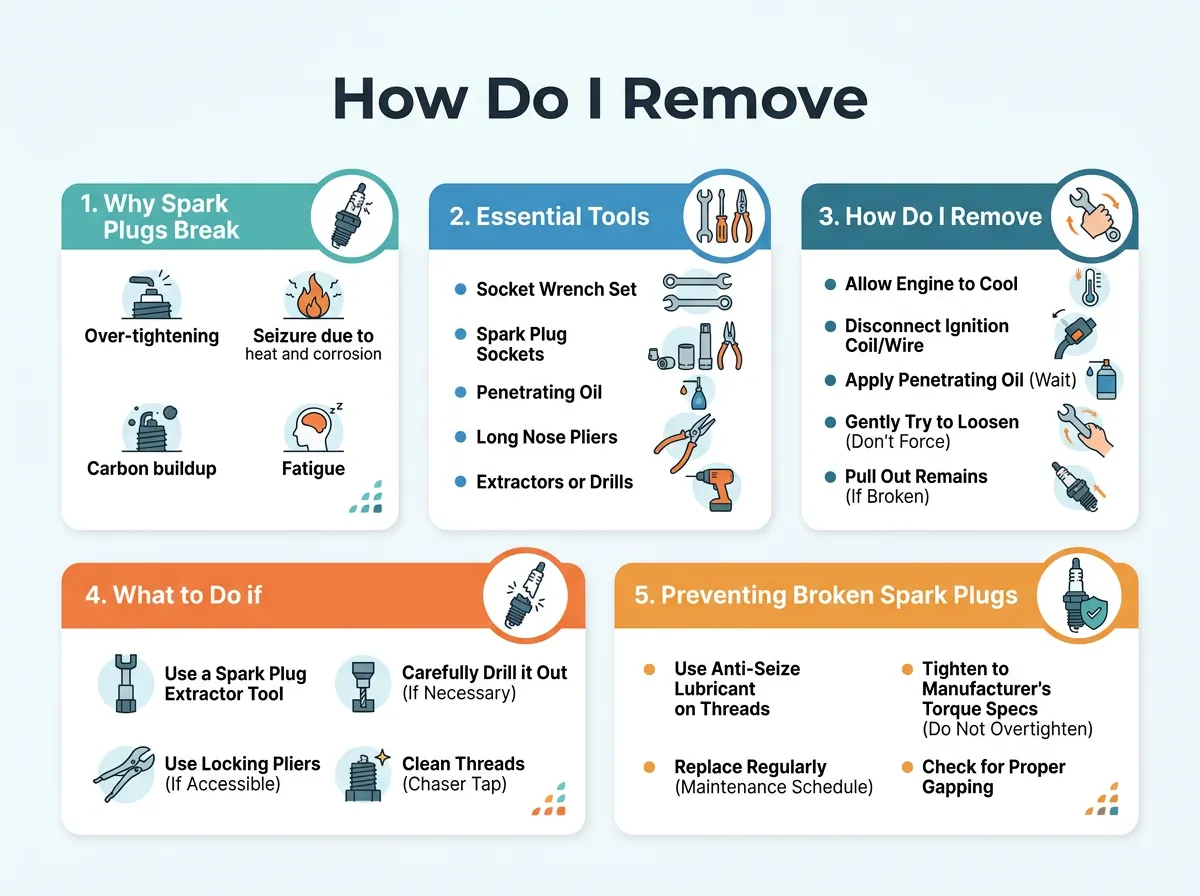
How Do I Remove a Broken Spark Plug? — key points at a glance
Here is what you should have on your workbench:
- Penetrating oil (like PB Blaster or Liquid Wrench)
- A spark plug extractor tool (often called an easy-out)
- A socket wrench set with long extensions
- A hammer or rubber mallet
- A shop vacuum or compressed air can
- Safety glasses and heavy work gloves
- A torque wrench for the new installation
Having the right extractor is key. These tools have reverse threads. As you turn them counter-clockwise, they bite into the inside of the broken plug. This strong grip lets you back the plug out safely.
How Do I Remove a Broken Spark Plug? Step-by-Step Guide
Now, let us get to work. Take your time during this process. Rushing is your worst enemy here. Go slow and stay calm.
Step 1: Clean the Area
Put on your safety glasses. Use your shop vacuum or compressed air to blow out the spark plug well. You must remove all dirt and debris. If any small pebbles fall into your open cylinder, they can cause massive engine damage later. Keep the workspace spotless.
Step 2: Apply Penetrating Fluid
Spray a generous amount of penetrating oil directly onto the broken plug. Do not try to turn it yet. Let the oil sit for at least 30 minutes. An hour is even better. The oil needs time to creep down into the rusted threads. It loosens the grip of the corrosion.
Step 3: Insert the Extractor Tool
Choose an extractor that fits snugly inside the hollow center of the broken plug. Tap it gently with a hammer. You want the reverse threads of the extractor to bite into the soft metal of the plug shell. Do not hit it too hard. You do not want to crack your cylinder head.
Step 4: Turn and Extract
Attach your socket extension to the extractor. Slowly turn it counter-clockwise. Apply steady, even pressure. Do not jerk the wrench. If it feels stuck, stop. Apply more oil and wait another half hour.
If you feel the tool slipping or if the resistance is too high, you risk damaging the delicate engine block threads. Many DIYers ask questions about thread safety on forums; you can read expert insights on removing a broken spark plug from an engine block on Quora to see how others avoid ruining their cylinder heads.
Keep turning slowly. Soon, you will feel the broken plug loosen. Gently back it all the way out of the engine block.
What to Do if the Ceramic Core Breaks
Sometimes, the ceramic porcelain core breaks into pieces inside the plug well. This makes the job a bit more complex. You must handle the ceramic first.
Dealing with Loose Porcelain
You must remove every piece of ceramic before you try to extract the metal shell. Ceramic is extremely hard. If a piece falls into the combustion chamber, it can scratch the cylinder walls. This can destroy your engine in seconds.
Using a Vacuum or Compressed Air
Use a small, flexible hose attached to your shop vacuum. Insert it into the well to suck up all the loose pieces. You can also use long needle-nose pliers to grab larger chunks. Inspect the well with a bright flashlight. Make sure it is completely clear before you proceed.
Preventing Broken Spark Plugs in the Future
Once you get the broken plug out, you want to make sure you never have to do this again. Prevention is very simple. It only takes a few extra minutes during your next tune-up.
Use a Torque Wrench
Never guess how tight your spark plugs are. Always use a torque wrench. Look up the exact torque spec for your vehicle in the owner’s manual. Tightening them to the correct spec prevents metal stress and keeps them easy to remove later.
Apply Anti-Seize Wisely
Some mechanics recommend using a tiny dab of anti-seize lubricant on the plug threads. This prevents rust. However, check your plug manufacturer’s guide first. Some modern plugs have a special plating. They do not need anti-seize. If you do use it, reduce your torque spec slightly so you do not over-tighten.
When to Call a Professional Mechanic
We all love a successful DIY project. But you must know your limits. Many drivers ask, how do I remove a broken spark plug when everything goes wrong? The answer is simple: call a pro before you make it worse.
If you try to extract the plug and the tool slips, stop. If the extractor breaks inside the plug, stop immediately. Extractor tools are made of hardened steel. They are almost impossible to drill out. If you break an extractor, a professional mechanic will have to remove the entire cylinder head. This is a very expensive repair.
If you feel uncomfortable at any point, call a tow truck. A quick trip to a local shop might cost a bit of money. But it is much cheaper than buying a new engine head.
Conclusion
Breaking a spark plug is a stressful event. But it does not have to be the end of the world. With the right tools, plenty of penetrating oil, and some patience, you can solve the problem yourself. Just remember to go slow. Use your vacuum to keep the cylinder clean. If you run into trouble, do not hesitate to ask for professional help. Now, get back out to the garage and tackle that project with confidence!
Frequently Asked Questions
Can I drive with a broken spark plug?
No, you should never drive with a broken spark plug. It will cause your engine to misfire and can damage your catalytic converter. It can also allow unburned fuel to ruin your cylinder walls.
How much does it cost to have a mechanic remove a broken spark plug?
A professional mechanic will usually charge between $150 and $300 to extract a broken plug. However, if the cylinder head must be removed due to damage, the cost can easily rise to over $1,000.
Do I need a special tool to remove a broken spark plug?
Yes, you will need a tapered extractor tool or an easy-out socket. These tools are designed to grip the inner walls of the broken plug shell and back it out safely without slipping.
Can I use WD-40 to loosen a stuck spark plug?
Yes, you can use WD-40, but a dedicated penetrating oil works much better. Specialty fluids like PB Blaster or Liquid Wrench are designed to dissolve tough rust and carbon deposits much faster.
How do I prevent spark plugs from seizing in the future?
You can prevent seizing by using a torque wrench to avoid over-tightening. You can also apply a very small amount of anti-seize lubricant to the threads if the plug manufacturer recommends it.
What happens if metal shavings fall into the cylinder?
Metal shavings can cause severe cylinder wall scratching and engine damage. If any debris falls inside, you must use a vacuum or a magnet to clean the combustion chamber completely before starting the car.
