


You can tell a spark plug is bad if your car experiences rough idling, engine misfires, poor fuel economy, or difficulty starting. Inspecting the plugs physically for oil, soot, or a worn electrode will confirm if they need to be replaced. Replacing these small parts promptly prevents costly engine damage and restores smooth performance.
Imagine you are driving down a quiet road. The sun is shining, and your favorite song is playing. Suddenly, your car starts to shake. The engine hesitates when you press the gas pedal. You feel a sudden loss of power. This is a stressful situation for any driver. Many people think their engine is dying. However, the true culprit is often a very small, cheap part. That part is the spark plug. How do you know when a spark plug is bad? It is a question that every car owner should ask before small issues turn into expensive repairs.
We often ignore spark plugs because they are hidden deep inside the engine. They work silently under the hood, day after day. Yet, these tiny devices carry a massive responsibility. Without them, your car cannot run at all. They are the heart of your engine’s combustion process. In this guide, we will explore the major warning signs of failing plugs. We will cover physical checks, performance issues, and why fast action saves you money. By the end, you will have all the knowledge you need to keep your car running like new.
Key Takeaways
- Engine Misfires: A stumbling or hesitating engine often points to a spark plug that is failing to fire.
- Rough Idling: If your car vibrates, shakes, or makes loud noises while parked, your plugs may be dirty.
- Wasted Fuel: Bad plugs do not burn fuel efficiently, which can drop your gas mileage by up to 30 percent.
- Hard Starts: Struggling to turn the engine over in the morning can mean your plugs are worn out.
- Visual Clues: Black soot, oil, or a melted tip on the spark plug is a clear sign it needs replacement.
- Easy Fix: Swapping out old plugs is a cheap way to protect your engine and boost power.
📑 Table of Contents
What Does a Spark Plug Do?
Before we look at the signs of a bad plug, let’s look at its job. Your car engine needs three basic things to run. It needs air, fuel, and fire. The spark plug provides that fire. It is a simple but vital task. If the spark is weak or missing, your engine cannot make power.
Creating the Spark
Every time your engine spins, electricity flows to the spark plug. The plug sends a tiny bolt of electricity across a small gap. This spark ignites the fuel and air mix. This ignition causes a tiny, controlled explosion inside the cylinder. That explosion pushes the pistons down. That movement is what turns your wheels and drives your car forward.
Transferring Heat
Spark plugs have another job that many people do not know about. They help pull heat away from the engine cylinder. They send this heat into the cooling system. This keeps the engine at a safe temperature. If a plug fails, your engine can get too hot. This can cause severe damage to your engine block over time.
Key Symptoms of a Bad Spark Plug
How do you know when a spark plug is bad without opening the hood? Your car will tell you. It will make strange noises, shake, or use too much gas. You do not need to be a professional mechanic to spot these signs. You just need to pay attention to how your car behaves.
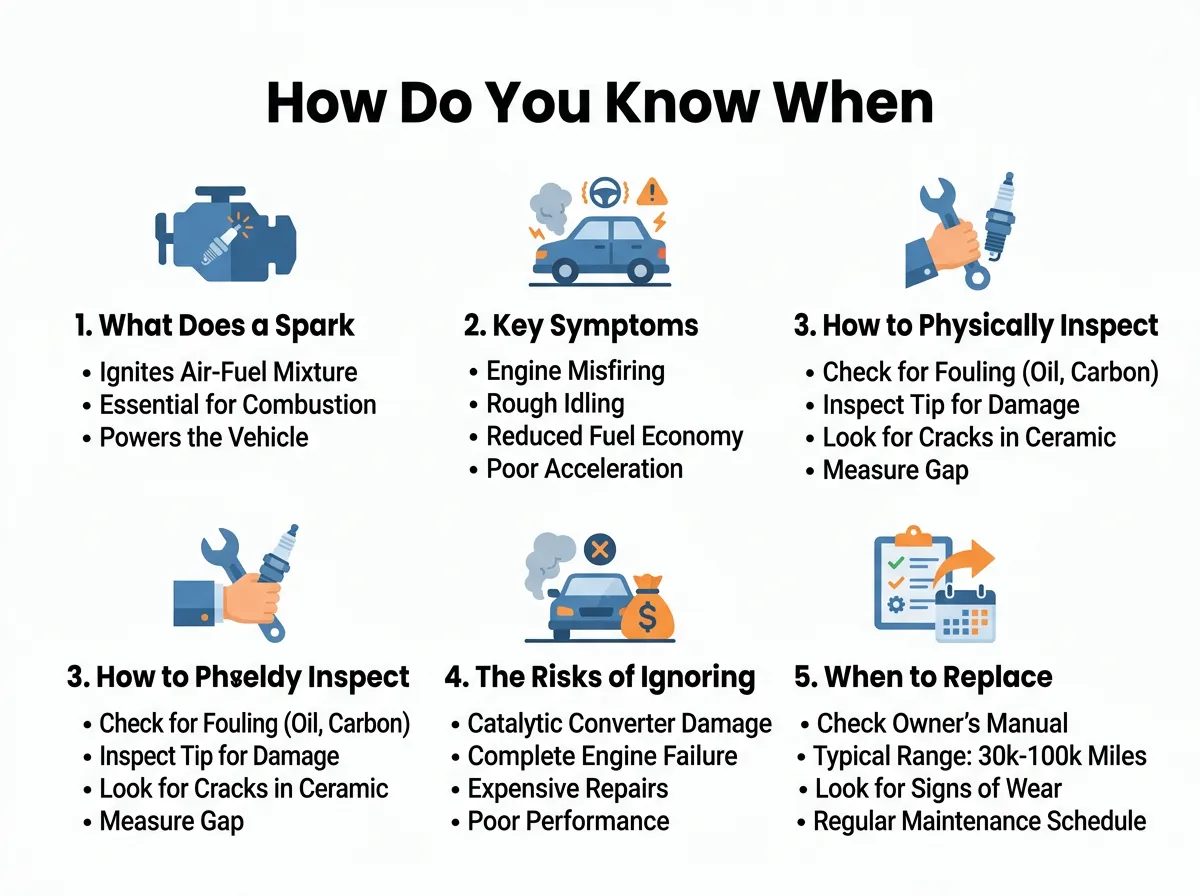
How Do You Know When a Spark Plug Is Bad? — key points at a glance
Engine Misfires and Rough Idling
When you sit at a red light, your car should feel smooth and quiet. If it shakes, vibrates, or sounds like a lawnmower, you have a rough idle. This happens when the spark plug fails to ignite the fuel properly. You can learn more about how to spot these issues in this helpful guide on bad spark plug symptoms. An engine misfire is similar. It feels like a quick stumble or jerk. The engine loses power for a split second. This happens because a plug did not fire at the right time.
Hard Starts and Battery Drain
Does your car struggle to start in the morning? Do you have to turn the key many times? Many people blame a dead battery or a bad starter. However, old spark plugs are a common cause. If the plugs cannot make a strong spark, the engine will just crank and crank. This puts extra stress on your battery and starter motor.
Poor Fuel Economy
Have you noticed more trips to the gas station lately? Worn spark plugs can reduce your fuel economy by up to 30 percent. This happens because the fuel does not burn completely. The unburnt fuel simply exits through the exhaust system. This wastes your hard-earned money and hurts the environment.
Sluggish Acceleration
When you press the gas pedal, your car should respond right away. If it feels slow, heavy, or hesitant, your plugs might be old. This is because they cannot keep up with the extra fuel entering the engine when you accelerate. The car will feel like it is dragging a heavy load.
How to Physically Inspect Your Spark Plugs
Sometimes, visual checks are the best way to be sure. If you feel comfortable, you can remove a spark plug to look at it. It only takes a few basic tools.
Reading the Spark Plug Tips
The tip of the plug tells a story about your engine. A healthy plug looks dry and slightly grey or light brown. If the tip is black, oily, or melted, you have a problem. You can study these issues deeper by learning how to read spark plugs and identify engine health issues early.
Carbon Fouling vs. Wet Fouling
A black, dry, dusty buildup on the tip is called carbon fouling. This means your engine is running too rich. It is getting too much fuel and not enough air. A wet, oily plug is called wet fouling. This is more serious. It means oil is leaking into your engine cylinder. This leak must be fixed before you put in new plugs. To understand the difference between these types of damage, check out this article on the signs of fouled spark plugs.
The Risks of Ignoring Bad Spark Plugs
It is tempting to put off car repairs. You might think a little shake is fine. However, waiting will cost you more money in the long run. Bad plugs can trigger a chain reaction of damage.
Catalytic Converter Damage
When a spark plug misfires, unburnt fuel travels down your exhaust pipe. This raw fuel lands on the hot catalytic converter. It burns inside the converter and melts the internal parts. Replacing a catalytic converter can cost thousands of dollars. A cheap spark plug can save you from this massive bill.
Piston and Valve Damage
Bad spark plugs can cause engine knocking. This is when fuel ignites at the wrong time. This creates shockwaves inside the engine. These waves can crack pistons, bend valves, and ruin your engine block. This is a catastrophic failure that often requires a whole new engine.
When to Replace Your Spark Plugs
Prevention is always better than cure. You should replace your plugs before they fail completely. Every car is different, so check your owner’s manual.
Standard vs. Long-Life Plugs
How long do spark plugs last? It depends on the metal they are made of. Copper plugs are cheap but only last about 30,000 miles. Platinum and iridium plugs are more expensive. However, they can last up to 100,000 miles. Always check your car manual for the correct type for your vehicle.
Proactive Maintenance Tips
Check your spark plugs during your regular maintenance. Look for loose wires or cracked rubber boots. If you replace one plug, replace them all at the same time. They wear out at the same rate. Keeping them matched ensures your engine runs smoothly and stays balanced.
Conclusion
Taking care of your car does not have to be hard. Knowing how do you know when a spark plug is bad is a great first step. Pay attention to how your car feels, sounds, and smells. If you notice a rough idle, poor fuel use, or slow starts, check your plugs. Replacing them is quick and cheap. It will keep your car running great for many miles to come.
Frequently Asked Questions
How often should I change my spark plugs?
It depends on your vehicle and the plug type. Copper plugs last about 30,000 miles, while iridium or platinum plugs can last up to 100,000 miles. Check your owner’s manual for exact recommendations.
Can bad spark plugs cause the check engine light to come on?
Yes, bad spark plugs are a very common cause for a check engine light. A misfire caused by a bad plug will trigger the engine computer to turn the light on.
Can I drive with a bad spark plug?
You can drive for a short distance, but it is not safe for your engine. Driving with a bad plug can melt your catalytic converter and cause severe internal engine damage.
Do I need to replace all spark plugs at once?
Yes, you should always replace spark plugs as a complete set. They wear out at the same rate, and having one new plug with old ones can cause engine imbalance.
Why is there oil on my spark plugs?
Oil on a spark plug means you have a leaking valve cover gasket or worn O-rings. This leak allows engine oil to seep into the spark plug well and must be repaired.
How much does it cost to replace spark plugs?
Spark plugs themselves are cheap, usually costing between $5 and $20 each. If you go to a mechanic, the total price with labor usually ranges from $100 to $300.
