



If your car struggles to start, idles roughly, or gets poor fuel economy, you likely need new spark plugs. Watch out for engine misfires and slow acceleration, which are classic signs of worn-out plugs. Replacing them on time protects your engine and keeps your vehicle running smoothly.
Imagine walking out to your car on a chilly morning. You are already running late for work. You jump in, turn the key, and… click, click, sputter. Your engine groans but refuses to catch. You try again, and it finally stumbles to life, shaking the whole car. This frustrating moment is more common than you think, and the culprit is often a tiny part you rarely see.
Your car is a complex machine, but it relies on tiny, controlled explosions to move. The small parts that make these explosions happen are your spark plugs. When they work well, you do not even think about them. But when they wear out, your daily drive can quickly turn into a stressful headache.
In this guide, we will explore How to Tell If You Need New Spark Plugs? so you can catch issues before you end up stranded. We will look at the common warning signs, explain what causes them to wear out, and show you how to check them yourself.
Key Takeaways
- Hard Starts: If your engine struggles to turn over, your spark plugs might not be creating a strong enough spark.
- Rough Idling: A bumpy, vibrating, or noisy feel when your car is parked is a major sign of bad plugs.
- Poor Fuel Economy: Old spark plugs waste fuel, leading to a sudden drop in your miles per gallon.
- Engine Misfires: If your engine stumbles, hesitates, or loses power for a split second, your plugs are failing to ignite.
- Sluggish Acceleration: A lack of throttle response or slow pickup often means your spark plugs are worn out.
- Preventative Care: Checking your owner’s manual is key, as most spark plugs need replacement every 30,000 to 100,000 miles.
📑 Table of Contents
Why Spark Plugs Matter So Much
To understand your car, you need to know what spark plugs do. They sit inside your engine’s cylinder head. Their main job is to ignite the mixture of air and fuel. This ignition creates the power that pushes your car down the road.
Think of spark plugs as the fire starters of your engine. Without a strong spark at the exact right millisecond, your engine cannot run smoothly. Over time, these parts face extreme heat and pressure. They spark millions of times, which slowly wears down their metal tips. This wear makes it harder for the spark to jump the gap. When that happens, your engine begins to struggle.
Top Signs Your Spark Plugs Are Failing
How to Tell If You Need New Spark Plugs? Your car will usually speak to you through clear physical warnings. Here are the most common signs that you should look out for.
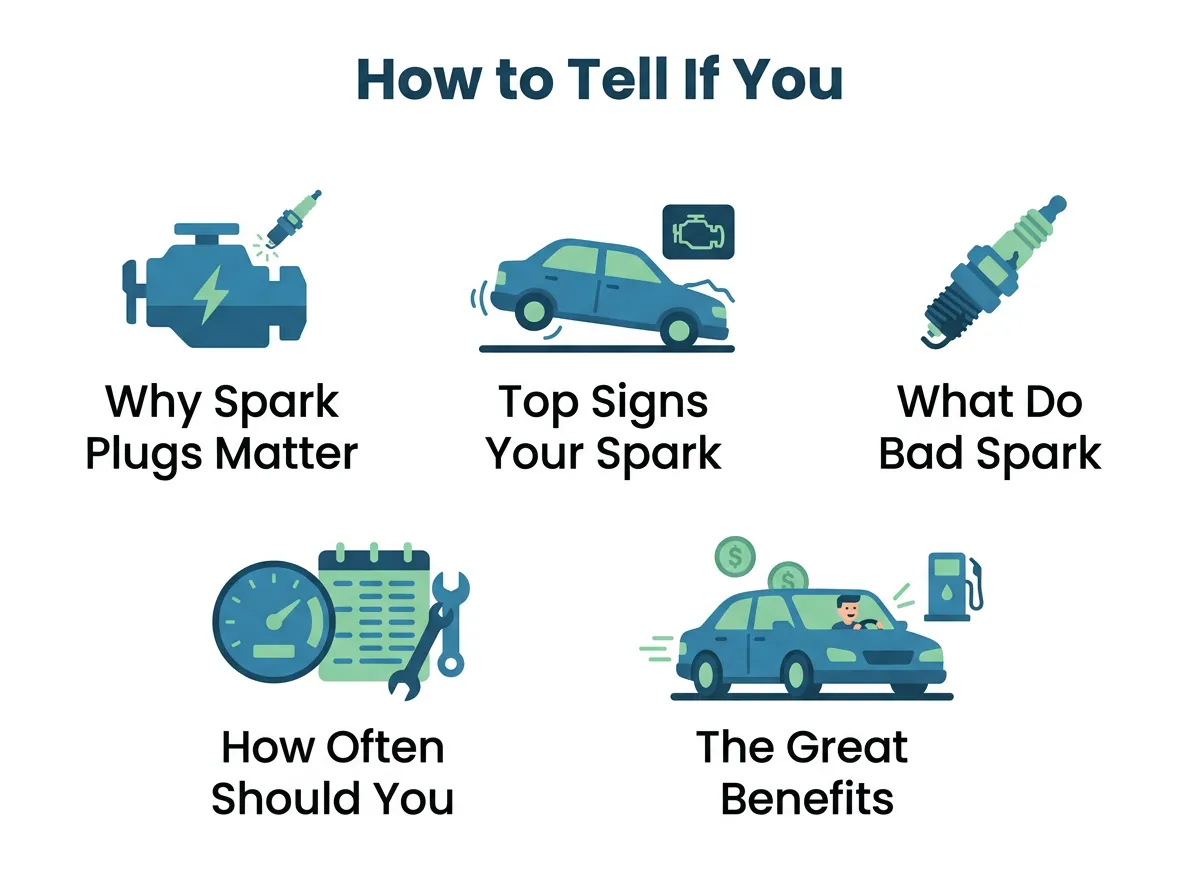
How to Tell If You Need New Spark Plugs? — key points at a glance
1. The Engine Idles Roughly
When your car is parked or sitting at a red light, it should feel smooth. The engine should make a steady, quiet purr. If you feel the steering wheel vibrating, or if you hear a choppy, bouncing sound from under the hood, your plugs may be failing. This rough idle happens because the cylinders are not firing at the same pace.
2. You Suffer from Engine Misfires
Have you ever felt your car stumble or lose power for a brief second while driving? That is an engine misfire. It happens when a spark plug fails to ignite the fuel at the right moment. Spotting the signs spark plugs need replaced early can prevent costly repairs down the road. If you let misfires go unchecked, they can destroy your expensive catalytic converter.
3. Sluggish or Slow Acceleration
When you step on the gas pedal, you expect your car to respond right away. If you feel a delay, or if the car feels heavy and slow to build up speed, your spark plugs are likely tired. Drivers often ask what are some signs that your car needs new spark plugs versus other engine issues, and a sudden loss of pep is a major clue. New plugs will quickly restore that crisp, responsive feel.
4. Your Gas Mileage Drops Plentifully
Are you visiting the gas station much more often lately? Poor fuel economy is a classic sign of bad spark plugs. When plugs wear out, they do not burn fuel efficiently. Much of the gas goes to waste and exits through the tailpipe. A fresh set of plugs can improve your fuel economy, saving you money at the pump.
5. The Car Is Very Hard to Start
A weak spark plug has to work twice as hard to get the engine running. On cold days, this job is even harder. If your car cranks for a long time before it starts, your spark plugs might be near the end of their life.
What Do Bad Spark Plugs Look Like?
If you are handy, you can pull a spark plug out and look at it. The physical look of a plug tells a story about your engine’s health.
Healthy Spark Plugs
A healthy plug should look clean. It will have a light grey or tan color on the tip. There should be no heavy deposits, wet oil, or melted metal.
Worn and Rounded Electrodes
As plugs age, the metal tip wears down and becomes rounded. This widens the gap that the spark must jump. A wide gap means a weaker spark, which causes poor engine performance.
Fouled Spark Plugs
Sometimes, plugs get coated in black soot, wet fuel, or oily grime. This is called a fouled plug. A fouled plug cannot create a spark at all. If you see wet oil on the plug, it could mean you have a leaky gasket or bad piston rings, which require immediate attention.
How Often Should You Replace Spark Plugs?
You might be wondering when to change spark plugs to keep your ride running at its best. There is no single answer for every vehicle, but there are some general rules.
Standard copper spark plugs are cheap but only last about 30,000 to 50,000 miles. Modern cars often use platinum or iridium spark plugs. These high-tech plugs can last anywhere from 80,000 to 100,000 miles. Always check your vehicle’s owner manual for the exact mileage recommended by the manufacturer. If you drive in dusty areas or carry heavy loads, you may need to swap them sooner.
The Great Benefits of Installing New Spark Plugs
Swapping out your old plugs does more than just fix problems. It actively improves your driving experience. Here are a few great things you will notice right away:
- Smooth Engine Performance: Your engine will idle quietly and run like new.
- Effortless Starts: No more nervous waiting on cold mornings. Your car will start instantly.
- Fewer Emissions: Cleaner burns mean you are doing your part for the environment.
- Better Throttle Response: Your car will feel light, fast, and fun to drive again.
How to Keep Your Spark Plugs in Great Shape
While spark plugs are tough, you can help them last longer. Keeping your engine clean and well-tuned is the first step. Avoid cheap, low-grade fuel that can leave dirty deposits behind. Also, fix any oil leaks as soon as you notice them. Oil leaking into the spark plug wells is a common cause of premature failure. Routine maintenance checks will keep your engine happy and save you from sudden breakdowns.
Conclusion
Knowing How to Tell If You Need New Spark Plugs? is a simple skill that every driver should have. By listening to your car and watching for signs like rough idling, slow starts, and poor fuel economy, you can catch problems early. Replacing your spark plugs is one of the easiest and cheapest ways to keep your car healthy. Do not wait until you are stuck on the side of the road. Listen to your engine, give it the fresh spark it needs, and enjoy a smooth, worry-free drive.
Frequently Asked Questions
Can I drive with bad spark plugs?
Yes, you can drive for a short time, but it is not recommended. Bad plugs cause engine misfires, which can damage your expensive catalytic converter over time. It is best to replace them as soon as you notice the symptoms.
How much does it cost to replace spark plugs?
The cost usually ranges from $100 to $300 for parts and labor, depending on your vehicle. The plugs themselves are quite cheap, but some engines require more labor to reach them. If you do it yourself, you will only pay for the parts, which can be as low as $20 to $80.
Do spark plugs affect acceleration?
Yes, worn spark plugs directly affect how fast your car accelerates. When they cannot create a strong spark, your engine struggles to burn fuel quickly when you step on the gas. This leads to a sluggish, heavy feeling when you try to speed up.
Should I replace all spark plugs at once?
Yes, you should always replace all of your spark plugs at the same time. Since they all wear out at a similar rate, replacing only one will lead to uneven engine performance. Installing a full fresh set ensures your engine runs smoothly and stays balanced.
Can bad spark plugs throw a check engine light?
Yes, bad spark plugs will often trigger your check engine light. The car’s computer detects engine misfires caused by the weak spark and turns on the light to warn you. Scanning the computer codes will usually point directly to the misfiring cylinder.
Can I replace spark plugs myself?
Yes, replacing spark plugs is a very common DIY task that requires basic tools. You will need a spark plug socket, an extension bar, and a ratchet. Just be sure to work on a cool engine and take your time to avoid stripping the threads.
