



Checking your spark plugs is a simple way to keep your car running smoothly. You can easily inspect them by removing the spark plug wire, unscrewing the plug, and checking for signs of wear like soot, ash, or a worn electrode. Using a spark plug gap tool or a multimeter will help you confirm if they need to be replaced.
Have you ever turned your car key and felt a strange shake? Or maybe your car takes a few extra seconds to start up in the morning. These small signs can mean your engine is struggling. Often, the culprit is a tiny but vital part: the spark plug. It works hard to keep your car moving. When it gets old, your drive gets rough.
Learning how to inspect your engine parts is a great way to save money. You do not need to be a professional mechanic to do this. With a few simple tools and some free time, you can easily check on your engine’s health right in your own driveway. Have you ever asked yourself, How to Check Spark Plugs? This guide has you covered.
In this article, we will walk you through the entire process. We will cover the tools you need, the steps to remove the plugs, and how to read the signs of wear. Let us get started and help your car run like new again.
Key Takeaways
- Look for physical wear: Color changes like ash-white deposits or oily black soot indicate potential engine issues.
- Check the gap: A gap tool ensures the spark plug gap matches your vehicle’s factory specifications.
- Use a multimeter: Testing electrical resistance helps confirm if the plug has failed internally.
- Work when cold: Always let your engine cool completely before removing any spark plugs to avoid stripping threads.
- Hand-tighten first: When reinstalling, always start by hand to prevent damaging the engine block threads.
📑 Table of Contents
Why Spark Plugs Matter to Your Car
Your engine is like a giant pump. It mixes air and fuel to make power. But this mixture needs a flame to start the fire. That is where spark plugs come in. They send a tiny bolt of electricity across a small gap. This spark starts the combustion that drives your car down the road.
Over time, these plugs face extreme heat. They spark millions of times as you drive. Because of this constant stress, they slowly wear out. When they fail, you will notice misfires, poor fuel economy, and a lack of power. That is why learning how to check spark plugs is such an important skill for any car owner. It helps you catch problems before they lead to costly repairs.
Tools You Need Before You Start
You do not need a garage full of heavy gear. A few basic hand tools are all it takes to get the job done. Gathering these beforehand will make the task quick and stress-free.
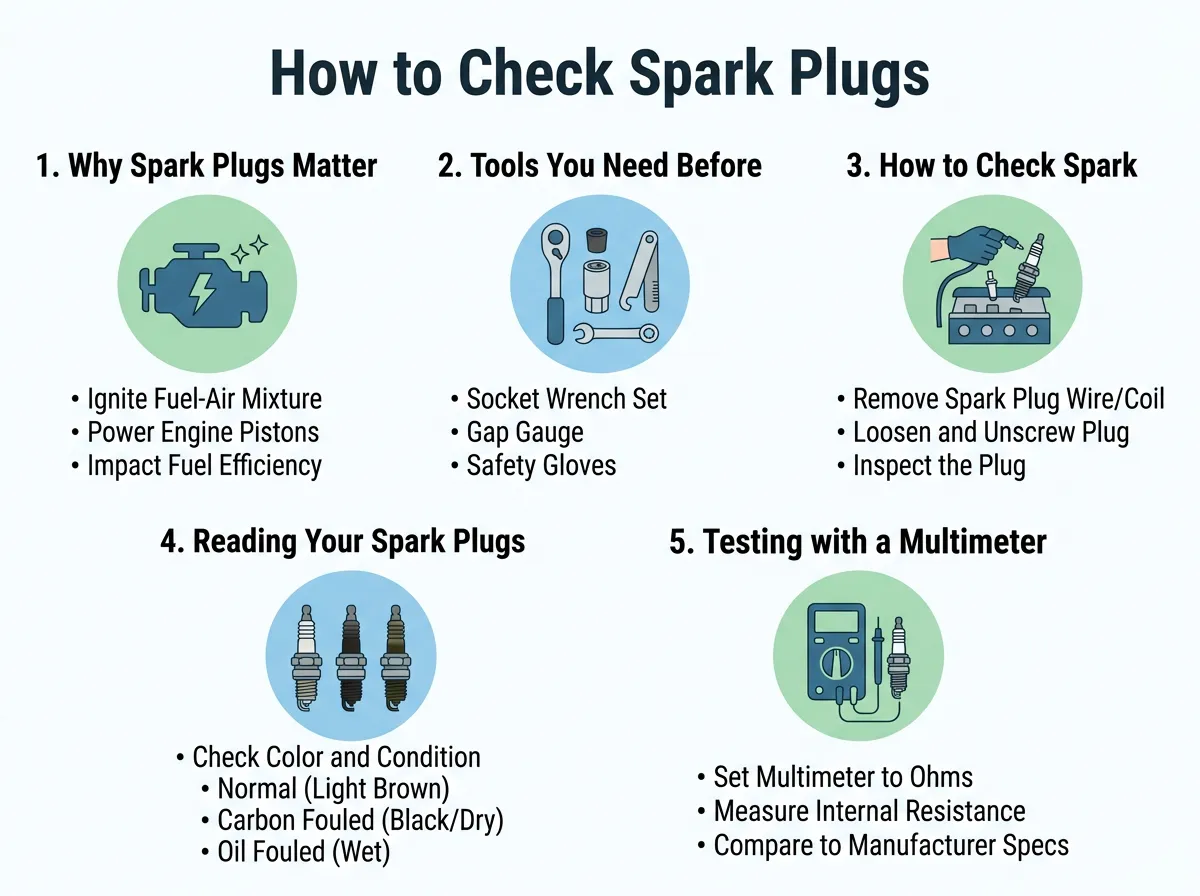
How to Check Spark Plugs? — key points at a glance
Here is a list of the key items you should have on hand:
- A ratchet wrench
- A spark plug socket with a rubber insert
- A socket extension bar
- A spark plug gap tool
- A clean rag
- Safety glasses and gloves
If you want to go a step further, you can also grab a digital multimeter. This tool lets you test the electrical resistance of the plug. It is highly recommended if you suspect an internal electrical failure.
How to Check Spark Plugs? Step-by-Step Guide
Now that you have your tools, it is time to look under the hood. Follow these steps carefully to ensure a safe and successful inspection.
Step 1: Cool Down and Prep
Safety always comes first. Never work on a hot engine. Let your car sit for at least an hour after driving. Hot metal can burn your skin easily. It can also warp the engine head if you remove the plugs while it is still warm. Open the hood and locate your spark plug wires or ignition coils. If you drive a Ford, the setup might look slightly different depending on the model. Reading about spark plug checks on Ford engines can give you model-specific advice.
Step 2: Clean the Area
Dirt and debris love to hide around the spark plugs. If dirt falls into the empty spark plug hole, it can ruin your cylinder. Use a can of compressed air or a soft brush to blow away any loose dirt before you pull anything out.
Step 3: Remove the Wire or Coil
Gently pull the wire boot or ignition coil off the plug. Always pull from the boot, not the wire itself. Pulling the wire can break the delicate connection inside. It helps to work on one plug at a time. This way, you will not mix up the wires when you put them back.
Step 4: Unscrew the Plug
Place your spark plug socket onto the plug. Attach your extension and ratchet. Turn the ratchet counterclockwise to loosen the plug. It should spin easily after a few turns. Lift the plug out of the engine slowly.
Reading Your Spark Plugs
Once the plug is out, it is time to play detective. The tip of the spark plug tells a story about how your engine is running.
Healthy Plugs
A healthy plug will look clean and dry. You might see a light tan or grey deposit on the side electrode. This means your engine is burning fuel perfectly and everything is working as it should.
Worn or Fanned Plugs
Look closely at the center electrode. If the edges are rounded or look melted, the plug is worn out. This increases the gap size. A larger gap means the spark has to work harder to jump across. This leads to misfires and bad gas mileage.
Oily or Wet Plugs
If the tip is wet with black oil, you have a leak. Oil might be leaking past worn piston rings. If the tip is wet with fuel, the cylinder might not be firing. This requires immediate attention.
Sooty or Ashy Plugs
A heavy coating of black soot means your engine is running “rich” (too much fuel). On the other hand, white ash deposits mean your engine is running too hot or burning oil additives.
Testing with a Multimeter
Sometimes a plug looks fine but is broken on the inside. To be absolutely sure, you can test it with a digital multimeter. This measures the resistance of the center electrode.
To do this, set your multimeter to the ohms setting. Place one probe on the top terminal where the wire connects. Place the other probe on the center electrode tip. You should see a steady reading, usually between 3,000 and 8,000 ohms. A reading of infinity or zero means the internal resistor is broken. If you are unsure of the probe placement, reading a guide on how to test a spark plug can help clarify the process.
Tips for Reinstallation
Putting everything back together is just as important as taking it apart. Bad installation can ruin your engine block threads.
Always start threading the spark plug by hand. Turn it clockwise. This prevents cross-threading, which can cost thousands of dollars to fix. Once it is snug, use your ratchet to tighten it. Do not over-tighten. If you have a torque wrench, use the manufacturer’s torque spec. Finally, snap the wire boot or coil back in place. You should hear a click when it seats correctly. Repeat this process for the rest of your plugs.
Conclusion
Learning how to check spark plugs is a valuable skill. It keeps your car running well and helps you spot engine issues early. By taking just an hour of your weekend, you can boost your fuel economy and ensure smooth starts. Keep an eye on your plugs every 30,000 miles to prevent sudden breakdowns. Your car—and your wallet—will thank you!
Frequently Asked Questions
How often should I check my spark plugs?
It is best to check your spark plugs every 30,000 miles. However, you should check them sooner if you notice a rough idle or poor fuel economy. Regular checks prevent minor engine issues from becoming major repairs.
What does a bad spark plug sound like?
A bad spark plug can cause your engine to sound rough or shaky when idling. You might hear sputtering or popping sounds from the exhaust when accelerating. This is a common sign of engine misfiring.
Can I check spark plugs without tools?
No, you need a few basic tools to check spark plugs safely. You will need a ratchet, an extension bar, and a special spark plug socket. Trying to remove them without these tools can crack the ceramic plug body.
What happens if I do not check and replace old spark plugs?
Neglecting your spark plugs will lead to a drop in fuel economy and engine power. Over time, it can cause severe engine misfires and destroy your catalytic converter. This makes eventual repairs much more expensive.
Do I need to replace all spark plugs at once?
Yes, you should always replace spark plugs as a complete set. If one plug is worn out, the others are likely close behind. Replacing them all at once ensures your engine runs evenly and efficiently.
Can bad spark plugs trigger a check engine light?
Yes, bad spark plugs frequently trigger the check engine light. The car’s computer will detect engine misfires and flag a code. Replacing the worn plugs will usually resolve the error code and turn off the light.
