



A bad spark plug typically causes noticeable engine issues such as frequent misfires, rough idling, poor acceleration, and difficulty starting your car. You might also experience a sudden drop in your fuel economy and see the check engine light illuminate on your dashboard. Inspecting the plug for physical wear, carbon buildup, or a widened gap will confirm if it needs to be replaced.
Imagine this scenario. You get into your car on a cold morning, turn the key, and expect the usual smooth purr of your engine. Instead, you get a sluggish cough. The car shakes, struggles, and finally stumbles to life. As you drive down the road, you notice a distinct lack of power when you press the gas pedal. It feels like your car is dragging a heavy anchor. These frustrating moments are incredibly common, yet many drivers overlook the tiny component responsible for it all.
That tiny component is the spark plug. This small metal plug plays a massive role in your vehicle’s performance. It is the heart of your engine’s combustion process. When it starts to fail, your entire driving experience suffers. But how do you know if a spark plug is bad? Understanding the warning signs can save you from high repair bills and keep you safe on the road. In this guide, we will walk through the symptoms, visual signs, and easy ways to check your spark plugs.
Let us dive deep into the world of automotive ignition. By the end of this article, you will know exactly what to look for. You will also learn how to tell when it is time to visit a mechanic or swap out the plugs yourself. Keeping your car running smoothly does not have to be a mystery.
Key Takeaways
- Engine Misfires: A sputtering engine or a sudden loss of power often indicates a failing spark plug that is struggling to ignite the fuel.
- Rough Idling: If your car vibrates, shakes, or makes unusual noises while stopped, your spark plugs might be worn out.
- Poor Fuel Economy: Worn spark plugs cannot burn fuel efficiently, which can decrease your gas mileage by up to 30 percent.
- Hard Starts: Difficulty turning over the engine, especially in cold weather, is a classic sign of bad spark plugs or failing plug wires.
- Visual Clues: Physical signs like black carbon buildup, melted electrodes, or wet oil on the plug tip mean it is time for a replacement.
- Maintenance Interval: Check and replace standard spark plugs every 30,000 miles, though premium iridium or platinum plugs can last up to 100,000 miles.
📑 Table of Contents
The Critical Role of Your Spark Plugs
Before we look at the signs of trouble, it helps to understand what a spark plug does. Your engine needs three things to run: air, fuel, and fire. The spark plug provides that fire. It sends a tiny bolt of electricity across a small gap. This spark ignites the compressed air and fuel mixture inside the engine cylinder. This miniature explosion pushes the piston down, which ultimately turns your car’s wheels.
Each cylinder in your engine has its own spark plug. If you drive a four-cylinder car, you have four plugs. A V6 has six, and a V8 has eight. When even one of these plugs fails to fire correctly, the entire balance of your engine is thrown off. This disruption is what leads to the performance issues you feel while driving.
Core Symptoms of Worn Spark Plugs
When you start experiencing car trouble, the vehicle usually tries to tell you what is wrong. If you are wondering, “how do you know if a spark plug is bad?”, you should pay close attention to how your car behaves during your daily commute. There are several classic symptoms of bad spark plugs that you can easily spot from the driver’s seat.
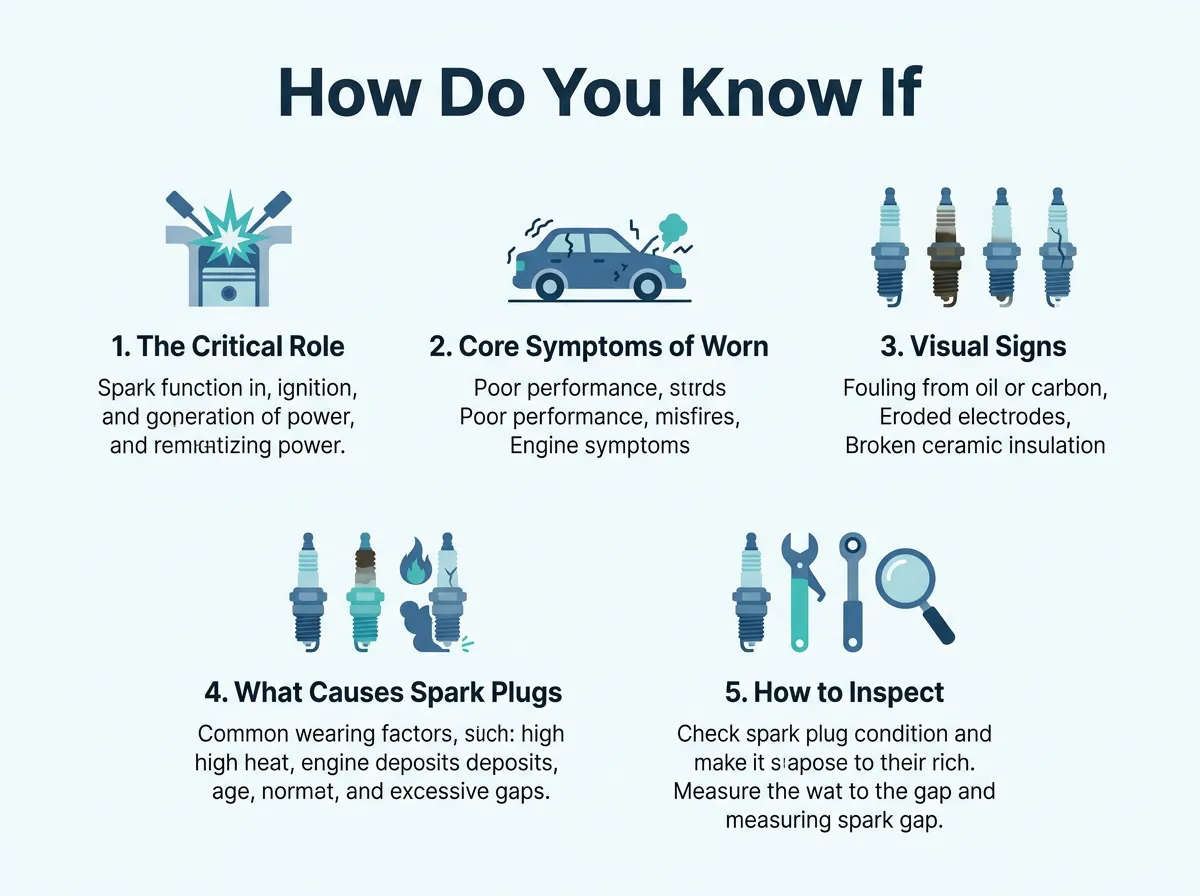
How Do You Know If a Spark Plug Is Bad? — key points at a glance
1. Engine Misfires and Hesitation
An engine misfire is one of the most common signs of a failing spark plug. A misfire happens when the spark plug fails to ignite the fuel-air mixture at the exact right moment. You might feel a sudden jerk, a brief loss of power, or a sputtering sound. Sometimes, the engine will hesitate for a second when you press the accelerator. If this happens often, it means your plugs are struggling to create a consistent spark.
2. Rough Idling and Shaking
When your car is parked or stopped at a red light, the engine should sound smooth and steady. If the spark plugs are bad, the engine has to work harder to stay running. This leads to a rough idle. You might feel the steering wheel vibrate, hear a loud rattling noise, or feel the entire car shake. A smooth idle is a sign of healthy combustion, while a rough idle indicates a cylinder is misfiring.
3. Poor Fuel Economy
Are you spending more money at the gas pump lately? Worn-out spark plugs can ruin your fuel efficiency. When a plug does not ignite the fuel completely, that unused gas goes to waste. It gets pushed out of the exhaust system without being used for power. This can lower your fuel economy by up to 30 percent. If your gas mileage drops suddenly, bad spark plugs are a likely culprit.
4. Trouble Starting the Car
If your battery is fully charged but your car still struggles to start, check your spark plugs. Your engine requires a strong, clean spark to kickstart the combustion process. Old, dirty plugs cannot produce enough energy to start the engine easily. This is especially true during cold winter mornings when the engine requires extra effort to turn over.
Visual Signs of a Failing Spark Plug
Sometimes, the best way to answer the question of how do you know if a spark plug is bad is to look at it directly. Removing a spark plug is a simple task with the right tools. Once you pull the plug out, its physical appearance will tell you a detailed story about your engine’s health. For more detailed diagnostics, you can read about the common symptoms of a faulty spark plug to match what you see on the tip.
Carbon Fouling
A healthy spark plug should have a light grey or tan color on the tip. If you pull out a plug and see a thick layer of dry, black soot, you have a carbon-fouled plug. Carbon buildup happens when there is too much fuel in the combustion chamber. It can also happen if you drive at low speeds for long periods. This black coating prevents the spark from jumping across the gap.
Oil Wetness
If the tip of your spark plug is wet with dark engine oil, you have a serious issue. Oil should never enter the combustion chamber. When it does, it coats the spark plug and stops it from sparking. This usually means you have leaking valve cover gaskets, worn piston rings, or damaged valve guides. You must fix the oil leak before installing new plugs, or the new ones will fail quickly too.
Melted or Blistered Electrodes
If the metal tip of the spark plug looks melted, blistered, or rounded off, the plug has run too hot. This extreme heat can be caused by engine overheating, using the wrong type of spark plug, or a lean fuel mixture. A melted plug cannot sustain a spark and must be replaced immediately to prevent engine damage.
What Causes Spark Plugs to Go Bad?
Like lightbulbs, spark plugs do not last forever. They are subject to extreme heat, high pressure, and constant chemical wear. Over time, the metal electrodes naturally wear away. This widens the spark gap. A wider gap requires more voltage to jump, which strains your ignition coils.
Additionally, modern cars with a coil-on-plug ignition system issues can experience accelerated wear. In these systems, each plug has its own ignition coil mounted directly on top of it. If a coil fails or leaks voltage, it can ruin the spark plug. Dirt, oil leaks, and poor fuel quality also shorten the life of your spark plugs. Regular maintenance is the best way to prevent these issues from causing major engine damage.
How to Inspect and Test Your Spark Plugs
If you suspect a problem, you can inspect your spark plugs at home. You will need a socket wrench, a spark plug socket, and a gap gauge tool. Always make sure your engine is completely cool before you begin. Working on a hot engine can burn your hands and damage the delicate threads in the engine block.
Gently remove the spark plug wire or the ignition coil to expose the plug. Use your socket wrench to unscrew the plug counterclockwise. Once removed, check the physical condition of the plug. Use your gap gauge to measure the distance between the two electrodes. Compare this measurement to the specifications in your car owner’s manual. If the gap is too wide or the plug looks dirty, it is time to buy a new set.
When and How Often to Replace Them
You do not have to wait for your car to break down before replacing your spark plugs. Following a routine replacement schedule will keep your car running at peak performance. Standard copper spark plugs usually last between 30,000 and 50,000 miles. However, many modern vehicles use high-performance iridium or platinum spark plugs. These advanced plugs are highly durable and can easily last up to 100,000 miles before needing replacement.
Always consult your vehicle owner’s manual for the manufacturer’s recommended service intervals. Replacing your plugs early is a cheap and easy way to prevent expensive engine repairs down the road.
Conclusion
Maintaining your car does not have to be stressful. By learning to recognize the warning signs of bad spark plugs, you can catch minor issues before they become major headaches. If your car is shaking at red lights, drinking too much gas, or struggling to start, take action. Inspect your spark plugs or visit a trusted mechanic to keep your engine firing on all cylinders. A little proactive care goes a long way toward keeping your journeys smooth, safe, and efficient.
Frequently Asked Questions
Can I drive with a bad spark plug?
While you can technically drive with a bad spark plug, it is not recommended. Driving with a faulty plug can cause serious engine misfires, damage your catalytic converter, and decrease your fuel economy. It is best to replace the bad plug as soon as possible to avoid expensive repairs.
Should I replace all spark plugs at the same time?
Yes, you should always replace all of your spark plugs at the same time. Since spark plugs wear out at a similar rate, if one has failed, the others are likely close behind. Replacing them as a complete set ensures your engine runs smoothly and stays balanced.
Can bad spark plugs cause the check engine light to turn on?
Yes, a bad spark plug is a very common trigger for the check engine light. When a spark plug fails to ignite the fuel properly, the engine computer detects a misfire and activates the warning light. A mechanic can read the error code to find out which cylinder is misfiring.
How long does it take to replace spark plugs?
For most vehicles, replacing spark plugs is a quick job that takes between 30 minutes to an hour. However, the time can vary depending on your car’s engine layout. Engines with easy access to the plugs are much faster to service than those where components must be removed first.
Do bad spark plugs cause a loss of power?
Yes, bad spark plugs will cause a noticeable loss of engine power, especially when you try to accelerate or drive uphill. Without a strong spark, the fuel-air mixture does not burn completely, which deprives your engine of the energy needed to run efficiently.
Can a bad spark plug damage my engine?
Yes, ignoring a bad spark plug can lead to severe engine damage over time. Unburnt fuel can wash away the protective oil on your cylinder walls, causing friction and wear. It can also flow into the exhaust system and destroy your expensive catalytic converter.
