


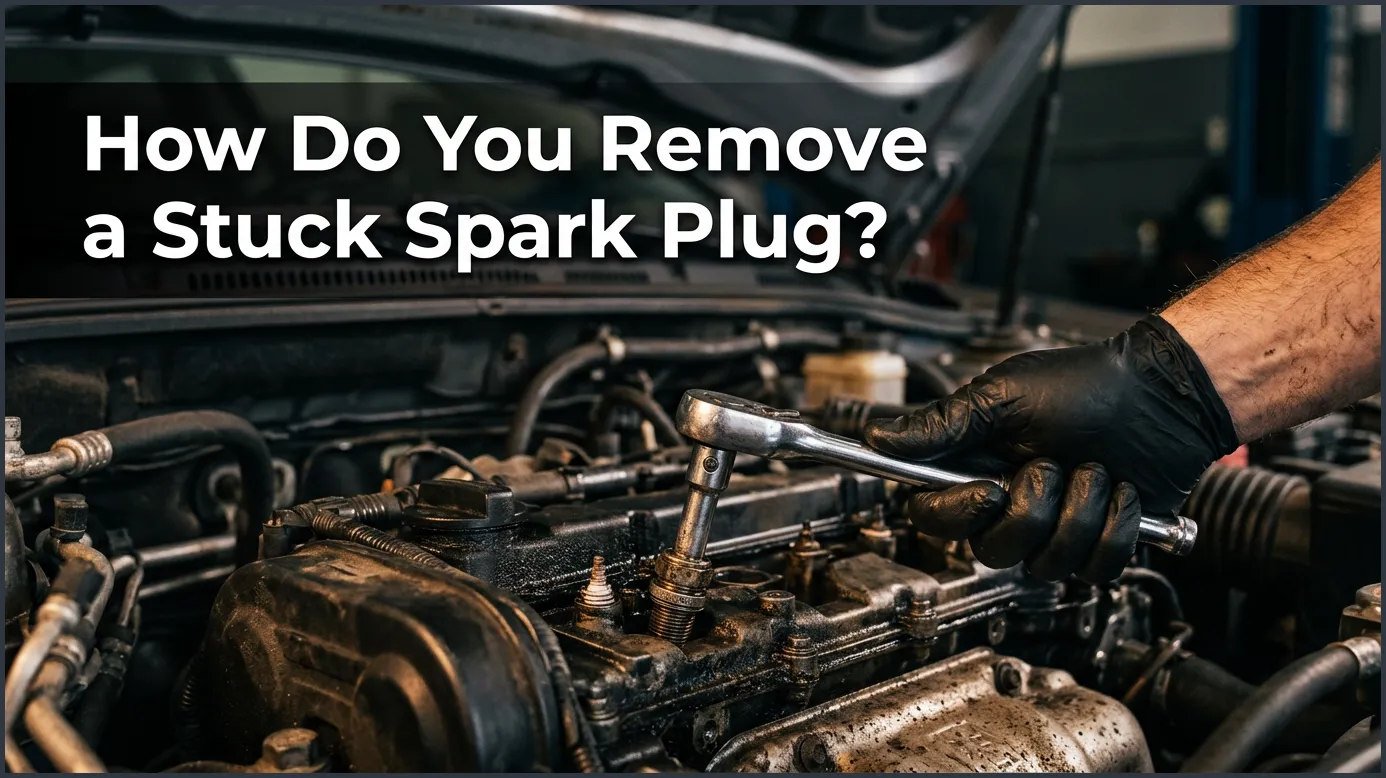
Removing a stuck spark plug requires patience, the right tools, and a very gentle touch. To free a seized plug, apply a high-quality penetrating oil, let it soak, and use a properly sized socket to apply steady pressure. If it still will not budge, careful heat application or a specialized extraction tool can help you avoid costly thread damage.
You are ready to tune up your car on a sunny Saturday morning. You have your new parts laid out. Your tools are clean and ready. You pull off the spark plug wire. You fit your socket over the first plug. You give the ratchet a pull. It does not move. You pull harder. Still, nothing happens. It feels like the plug is welded to the engine block.
A seized plug can turn a quick job into a stressful day. You do not want to pull too hard and snap the metal shell. If you do, you face a much larger repair bill. You might wonder, how do you remove a stuck spark plug without causing major damage? This is a very common issue for many DIY home mechanics.
In this guide, we will walk you through the safest ways to solve this problem. We will cover the tools you need, the steps to take, and what to do if things go wrong. With some patience and a few simple tricks, you can get that stubborn plug out safely. Let us get your car running smoothly again.
Key Takeaways
- Use penetrating oil: Spraying a rust-penetrating oil and letting it soak is the single best way to loosen stubborn threads.
- Work on a cool engine: Aluminum cylinder heads expand when hot, which can cause threads to strip easily if you force a plug out.
- Apply steady, even pressure: Avoid jerky movements or impact wrenches, which can easily snap the ceramic or metal shell.
- Tighten slightly first: Alternating between slight tightening and loosening helps break the corrosion bond.
- Know when to stop: If a plug resists all gentle efforts, stop before it breaks to avoid an expensive machine shop repair.
📑 Table of Contents
- Why Do Spark Plugs Get Stuck in the First Place?
- The Golden Rule: Start with a Cool Engine
- Prep Work: What Tools Do You Need?
- Step-by-Step: How Do You Remove a Stuck Spark Plug?
- Advanced Methods for Very Stubborn Plugs
- What to Do If the Spark Plug Breaks
- How to Prevent Stuck Spark Plugs in the Future
- Conclusion
Why Do Spark Plugs Get Stuck in the First Place?
Before you grab your tools, you should know why this happens. Metal parts inside an engine face extreme conditions. They get very hot and then cool down. Over time, this cycle changes the metal. Here are the three main causes of stuck plugs.
1. Metal Corrosion and Rust
Moisture can get into the tiny gaps between the plug threads and the engine head. Over thousands of miles, rust can form. This rust bonds the two parts together. It acts like glue, holding the plug tight.
2. Dissimilar Metal Reaction
Many modern cars have aluminum cylinder heads. Spark plugs are usually made of steel. When steel and aluminum touch, they can react. This is called galvanic corrosion. It makes the metals stick together. This is why a steel plug loves to seize inside an aluminum head.
3. Carbon Build-Up
Engines burn fuel. This burn leaves behind black soot. We call this soot carbon. Carbon can build up on the end of the spark plug threads. When you try to back the plug out, the carbon blocks the path. It jams the threads.
The Golden Rule: Start with a Cool Engine
This is the most important rule. If you must remove a stuck spark plug, patience is key. Never try to do this when the engine is hot. Let the car sit for at least a few hours first.

How Do You Remove a Stuck Spark Plug? — key points at a glance
Why Hot Metal Is Risky
Aluminum heads expand when they get hot. They get soft too. If you turn a steel plug in a hot aluminum head, you will strip the threads. Stripped threads mean the new plug will not screw in. Fixing stripped threads requires a special kit or a trip to a mechanic. Always wait until the engine feels cool to the touch.
A Safe Work Area
Working on a cool engine also keeps you safe. You will not burn your hands on hot pipes. You can take your time and focus on the job. Safety should always come first.
Prep Work: What Tools Do You Need?
Before you try to remove a stuck spark plug, make sure you have the right gear. Do not use cheap tools. Good tools prevent damage to your car. Here is your shopping list.
- A spark plug socket: This socket has a rubber insert inside. The rubber grips the ceramic tip of the plug. It protects the plug from breaking.
- Penetrating oil: Do not use regular oil. You need a thin oil that can crawl into tight spaces. Look for products made to free rusted bolts.
- A ratchet with a long handle: A longer handle gives you more leverage. You can apply force slowly and smoothly.
- Safety glasses: You will work with spraying oils and dirt. Protect your eyes.
Step-by-Step: How Do You Remove a Stuck Spark Plug?
Now, let us get to work. Follow these steps carefully. Do not rush. Patience is your best friend here.
Step 1: Clean the Area
To safely remove a stuck spark plug, start with a clean area. Dirt and sand can fall into the engine when you remove the plug. Use compressed air to blow away any dirt around the base. If you do not have air, use a brush. Clean the area well.
Step 2: Apply Penetrating Oil
Spray a good amount of penetrating oil around the base of the plug. You want the oil to sink deep into the threads. For detailed advice, you can read this helpful AutoZone guide on removing seized spark plugs. Once you spray the oil, wait at least 30 minutes. An hour is even better. Let the oil do the hard work for you.
Step 3: Try the “Tighten to Loosen” Trick
Put your socket on the plug. Do not try to turn it left to loosen it yet. Instead, try to turn it slightly to the right, as if you are tightening it. You only want to move it a tiny fraction of an inch. If you hear a small click, that is good. It means you broke the rust seal. Now, gently turn it to the left to loosen it.
Step 4: Use the Back-and-Forth Method
If the plug starts to turn but gets stiff again, stop. Do not force it. Turn it back the other way. Go back and forth. Turn it left a quarter turn, then right an eighth turn. This motion helps the oil work its way down the threads. It also helps clear out any carbon build-up.
Advanced Methods for Very Stubborn Plugs
What if the plug still will not move? Do not panic. There are other tricks you can try. Many car lovers share their best tips on forums. For example, you can read various discussions on car forums about stubborn plugs to see what worked for others. Here are two advanced steps.
The Heat Gun Trick
While you should not work on a hot engine, a little localized heat can help. Use a heat gun on the metal area around the plug. Do not use an open flame torch. A torch can melt wires or cause a fire. The heat gun will make the engine metal expand slightly. This can loosen the grip on the steel plug. Spray more oil immediately after heating.
The Extension Bar
If you need more power, use a longer bar. But be very careful. A long bar gives you a lot of force. If you feel the metal flex, stop. Do not break the plug. Keep your tool straight. If you pull at an angle, you will snap the ceramic tip.
What to Do If the Spark Plug Breaks
Sometimes, despite your best efforts, a plug snaps. This is a scary moment, but you can still fix it.
Using an Easy-Out Extractor
If the top of the plug breaks off, the threaded metal shell is still in the head. You can use a tool called a screw extractor. This tool has reverse threads. You tap it into the broken shell and turn it left. It grips the metal and backs it out. For a detailed guide on this process, check out the Champion Auto Parts guide on extraction. It has great visual tips.
Protect Your Engine Cylinder
If ceramic pieces fall into the cylinder, do not start the car. Ceramic is very hard. It will ruin your engine walls. Use a vacuum with a small hose to suck out any debris. You can also look up community tips for protecting your cylinder head online. If you are not comfortable doing this, call a professional mechanic. It is better to pay for a tow than a new engine.
How to Prevent Stuck Spark Plugs in the Future
Once you get the old plug out, you want to make sure this never happens again. Prevention is easy and cheap.
Use Anti-Seize Lubricant
Apply a tiny dab of anti-seize grease to the threads of your new spark plugs. This grease has metal particles that prevent rust and corrosion. But be careful. Do not get any grease on the electrode at the tip of the plug. Only put it on the threads. Also, reduce your torque slightly when tightening, as lubricated threads turn more easily.
Do Not Overtighten
Always use a torque wrench to install new plugs. Look up the torque spec for your car model. Overtightening is a main reason plugs get stuck later. A proper fit keeps the engine sealed without damaging the threads.
Conclusion
Learning how to remove a stuck spark plug takes time, but it saves you money. Removing a stuck spark plug can be a slow process. But you can do it if you stay calm and take your time. Remember to use a cool engine, apply plenty of penetrating oil, and use the back-and-forth method. Good luck with your car tune-up!
Frequently Asked Questions
Can you use WD-40 to loosen a stuck spark plug?
Yes, WD-40 can act as a light penetrating lubricant to help free stuck threads. However, a dedicated specialty penetrating oil usually works much faster and penetrates deeper into rusty threads. Always let it soak for at least thirty minutes before trying to turn the plug.
Should you remove spark plugs when the engine is hot or cold?
You should always remove spark plugs when the engine is completely cold. Working on a hot engine, especially one with an aluminum cylinder head, can easily strip the threads. This leads to a much more expensive thread repair job.
How long should you let penetrating oil soak on a stuck spark plug?
You should let penetrating oil soak for at least thirty minutes to an hour. For extremely stubborn or rusted plugs, letting it soak overnight will yield the best results. You can also tap the plug gently to help the oil work its way down.
Can you use an impact wrench to remove a stuck spark plug?
No, you should never use an impact wrench to remove a stuck spark plug. The sudden, violent force of an impact gun can easily snap the ceramic insulator or break the metal shell. Always use manual hand tools like a ratchet or breaker bar to apply steady, controlled pressure.
Does freezing spray help remove a stuck spark plug?
Yes, a specialty freeze spray can help shrink the metal of the spark plug slightly. When sprayed directly onto the plug, the sudden cold causes the metal to contract, which can break the rust bond inside the threads. It is a very effective tool when paired with penetrating oil.
What happens if you leave a stuck spark plug in the engine?
If you leave a stuck spark plug, your engine will eventually suffer from misfires, poor fuel economy, and rough idling as the plug wears out. Over time, the plug can also fuse permanently to the cylinder head, making it much harder to remove later. It is best to address the issue as soon as you notice it.
