


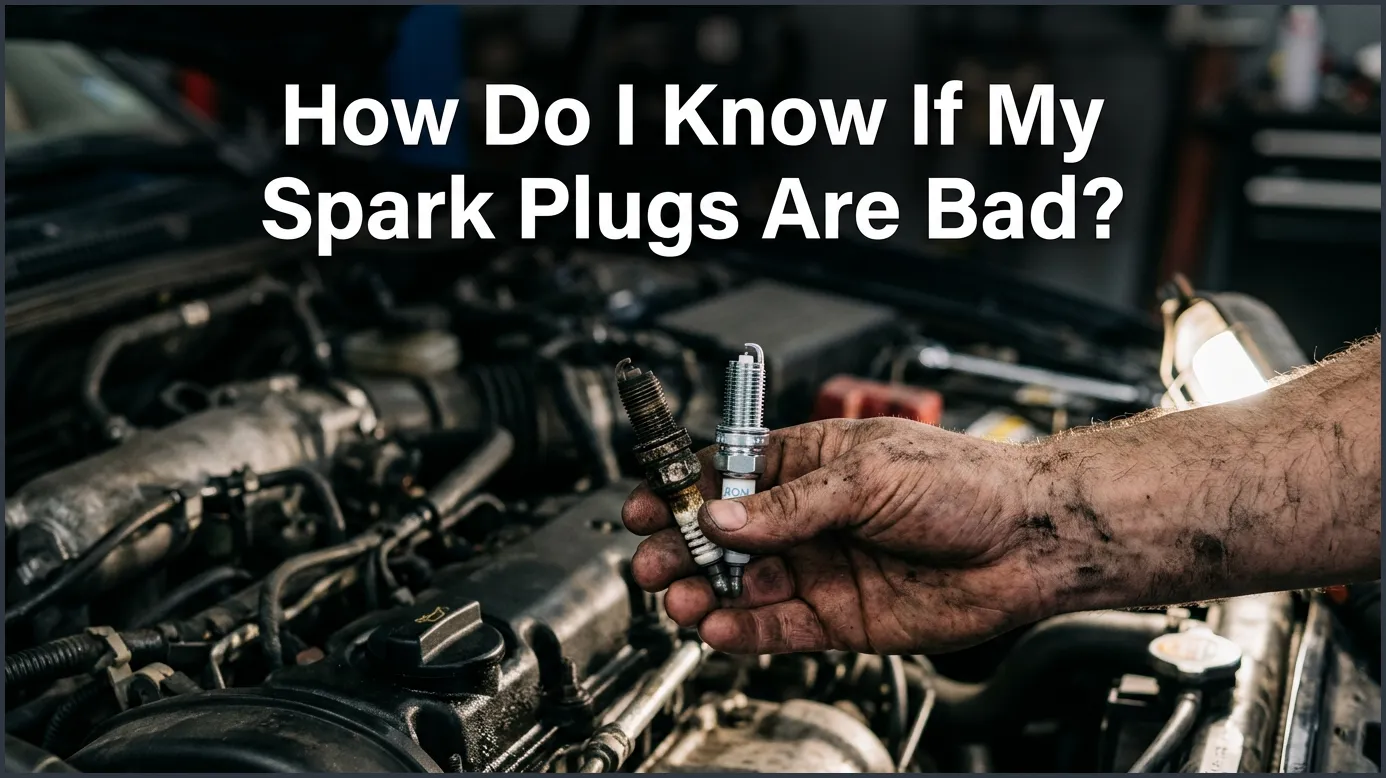
You can tell your spark plugs are bad if you experience engine misfires, a rough idling sensation, poor fuel economy, or difficulty starting your car. A sluggish throttle response and loud engine noises are also clear warning signs of failure. Replacing worn plugs promptly will restore your car’s power and protect your engine from costly damage.
Imagine you are late for work. You jump into your car and turn the key. Instead of a smooth roar, you hear a sad sputter. The engine shakes. It struggles to stay alive. This is a very stressful way to start your day. It is also a classic sign of engine trouble. Your car is trying to tell you something. Often, the issue comes down to a tiny, cheap part.
That tiny part is the spark plug. Spark plugs play a huge role in how your car runs. When they get old and dirty, your drive suffers. You might find yourself asking: how do I know if my spark plugs are bad? In this guide, we will look at the top symptoms of bad plugs. We will also share simple ways to test them and when to replace them. Let us dive in and get your car running smoothly again.
Key Takeaways
- Engine Misfires: A sudden loss of power or jerking motion means a plug is failing to ignite the fuel.
- Rough Idling: If your car shakes or sounds loud while parked, your spark plugs may be worn out.
- Poor Fuel Economy: Bad plugs burn fuel poorly, making your car drink gas much faster.
- Hard Starts: Difficulty cranking the engine on cold mornings is a classic sign of weak sparks.
- Visual Clues: Black soot, oil, or melted tips on the plug indicate severe engine or plug issues.
- Easy Testing: You can use a cheap spark plug tester to check if a plug is still good.
📑 Table of Contents
Why Your Spark Plugs Matter So Much
Your car needs three things to run. It needs fuel, air, and a spark. The spark plug is what creates that vital spark. Without it, your engine cannot burn fuel. If it cannot burn fuel, you cannot drive. It is just that simple.
The Heartbeat of Your Engine
Think of your spark plugs as the heartbeat of your engine. They sit inside the engine cylinders. They ignite the fuel and air mix thousands of times every minute. This tiny bolt of lightning pushes the pistons down. That movement is what turns your wheels. If the spark is weak, your engine loses power. If there is no spark, that cylinder stops working. This is why keeping them fresh is so vital for your car.
The Top Signs Your Spark Plugs Are Bad
Your car will usually warn you before a spark plug dies. You just need to know what to look and listen for. Here are the most common signs of trouble.
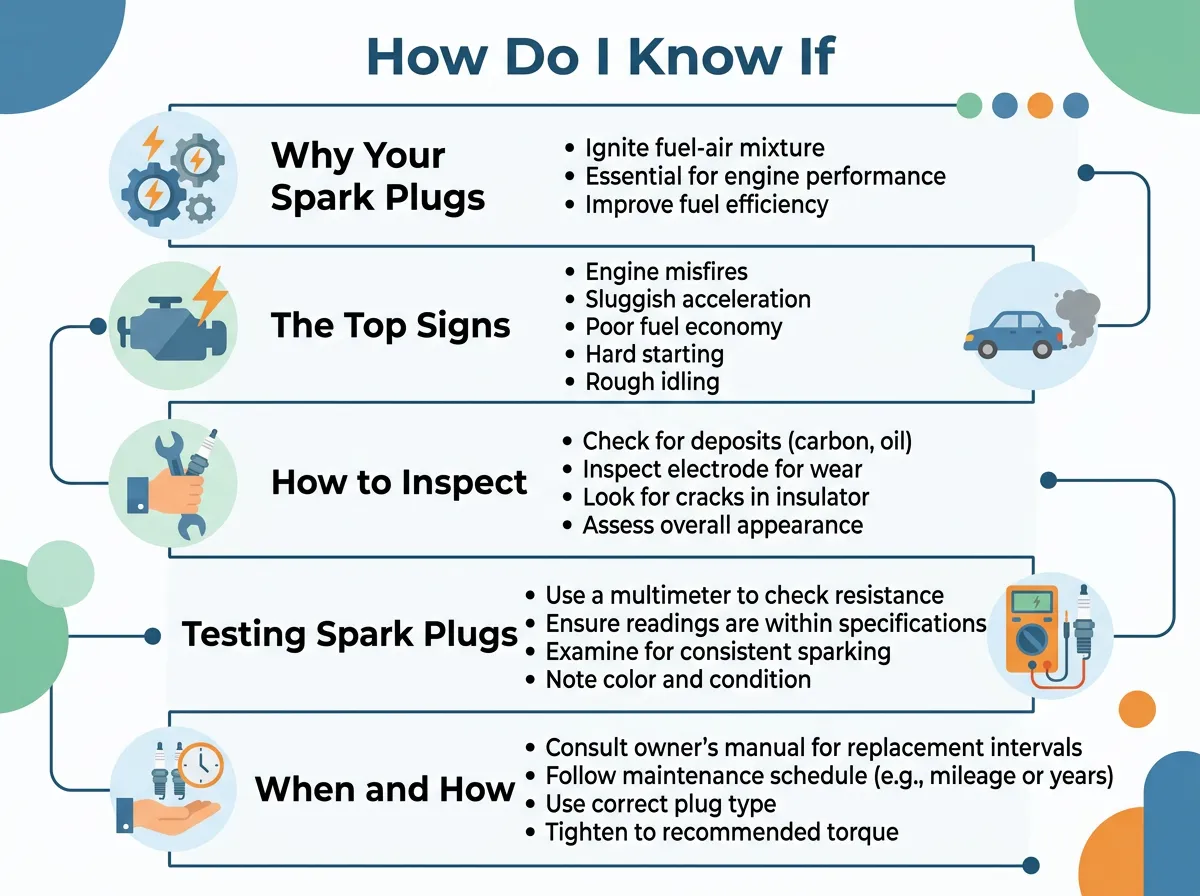
How Do I Know If My Spark Plugs Are Bad? — key points at a glance
1. Your Engine Misfires or Hesitates
An engine misfire feels like a sudden jerk or a loss of power. It happens when a spark plug fails to ignite the fuel at the right millisecond. You might feel the car stumble for a brief moment. This is one of the most obvious symptoms of failing plugs that you should never ignore. If you let it go, it can damage your expensive catalytic converter.
2. You Experience a Rough Idle
When your car is parked with the engine running, it should sound smooth. It should feel like a gentle hum. If your plugs are bad, the car might shake. You will hear a loud, rough noise. The RPM gauge on your dashboard might jump up and down. This shaky feeling is a key indicator. It is one of the classic signs of damaged spark plugs you can easily notice while waiting at a red light.
3. Your Fuel Economy Drops
Are you spending too much money at the gas pump lately? Worn spark plugs might be the thief. When plugs fail, they do not burn fuel fully. This waste means your engine has to work harder. It will gulp down more gas to make up for the lost power. Replacing bad plugs can often restore your fuel mileage instantly. It is a great way to save cash.
4. Starting Your Car Is a Struggle
Many people blame a dead battery when their car will not start. But bad spark plugs are also a common culprit. If the plugs cannot make a strong spark, the engine cannot catch fire. You might hear the engine crank over and over. If you ask yourself, how do I know if my spark plugs are bad, look at how hard it is to start the car on a cold morning. If it takes several tries, your plugs are likely worn out.
5. Slow Acceleration and Sluggish Response
When you press the gas pedal, you expect your car to go. But bad plugs make the engine feel lazy. You might press the gas and feel very little power. The car will accelerate slowly. It might even feel like it is dragging a heavy load. This lag can be dangerous when you try to merge onto a fast highway.
How to Inspect Your Spark Plugs Visually
Sometimes, the best way to answer the question, how do I know if my spark plugs are bad, is to look at them. You can pull a plug out and inspect its tip. The tip tells a story about your engine’s health.
The Carbon-Fouled Plug
A healthy plug should look clean and dry. If you see dry, black soot on the tip, you have a carbon-fouled plug. This happens when there is too much fuel in the mix. It can also happen from too much idling. The black soot blocks the spark, making it weak or dead.
The Wet or Oily Plug
If the tip of your plug is wet with oil, you have a bigger issue. Oil is leaking into the combustion chamber. This can damage your engine. It will also quickly ruin a brand new spark plug. You must fix the oil leak before putting in new plugs.
The Blistered or Melted Plug
A melted tip means the plug is running way too hot. This can be caused by engine overheating. It can also happen if you use the wrong type of spark plug. A melted plug can cause pre-ignition. This is when the fuel ignites too early. It can cause major engine damage very quickly.
Testing Spark Plugs and Ignition Coils
You do not have to guess if your parts are bad. You can test them with simple tools. This helps you target the exact problem.
Using a Spark Plug Tester
A spark plug tester is a cheap tool you can buy at any auto parts store. You hook it up between the spark plug wire and the engine. When you start the car, you look for a bright blue spark. If the spark is orange, weak, or missing, the plug is bad. Learning how to test a spark plug is a great DIY skill that saves you a trip to the mechanic.
Telling Plugs and Coils Apart
Sometimes, a bad ignition coil mimics a bad spark plug. Both cause misfires. So, how do you know which one is the real issue? You can swap the ignition coil to a different cylinder. If the misfire moves to the new cylinder, the coil is bad. If the misfire stays in the same place, the spark plug is the issue. This trick helps you differentiate between spark plugs and coils without paying for expensive tools.
When and How to Replace Your Spark Plugs
Replacing spark plugs is one of the easiest maintenance tasks. You can do it at home with a few tools.
The Standard Replacement Interval
Most standard spark plugs last between 30,000 and 50,000 miles. However, high-quality iridium or platinum plugs can last up to 100,000 miles. Always check your car owner’s manual for the exact interval. Do not wait for them to fail completely before you change them.
Easy DIY Tips for Replacement
If you want to replace them yourself, work on one plug at a time. This keeps you from mixing up the wires. Use a spark plug socket with a rubber insert. This protects the delicate ceramic shell from cracking. Always gap your new plugs before installing them. The gap must match your car’s specs exactly to ensure a perfect spark.
Conclusion
So, how do I know if my spark plugs are bad? Pay close attention to how your car feels and sounds. If you notice a rough idle, poor fuel economy, or a struggle to start, do not wait. Check your spark plugs right away. Regular checks keep your car running smooth and strong. They also save you money on gas and major repairs down the road. Keep your sparks bright, and enjoy a smooth drive every time you turn the key.
Frequently Asked Questions
How often should I replace my spark plugs?
Most standard spark plugs should be replaced every 30,000 to 50,000 miles. However, premium plugs made of platinum or iridium can easily last up to 100,000 miles. Always consult your vehicle’s owner manual for specific guidelines.
Can bad spark plugs cause a check engine light?
Yes, bad spark plugs will often trigger the check engine light. When a plug fails, it causes an engine misfire, which the car’s computer immediately detects. The computer then turns on the warning light to alert you of the issue.
Can I drive with a bad spark plug?
While you can technically drive with a bad spark plug, it is highly discouraged. Doing so can cause serious engine damage, waste fuel, and ruin your expensive catalytic converter. It is best to fix the problem as soon as possible.
Do bad spark plugs affect gas mileage?
Yes, bad spark plugs can lower your fuel economy by up to 30 percent. Because the plugs fail to burn the fuel efficiently, your engine has to consume much more gas to maintain its normal power level.
Why do spark plugs go bad?
Spark plugs go bad over time due to normal wear and tear from extreme heat and electrical voltage. They can also fail early due to carbon buildup, oil leaks in the engine, or using the wrong type of plug for your vehicle.
Can I replace spark plugs myself?
Yes, replacing spark plugs is a relatively easy DIY task for beginners. You only need a spark plug socket, a wrench, and a gapping tool to complete the job. Just make sure to work on one plug at a time so you do not mix up the ignition wires.
