


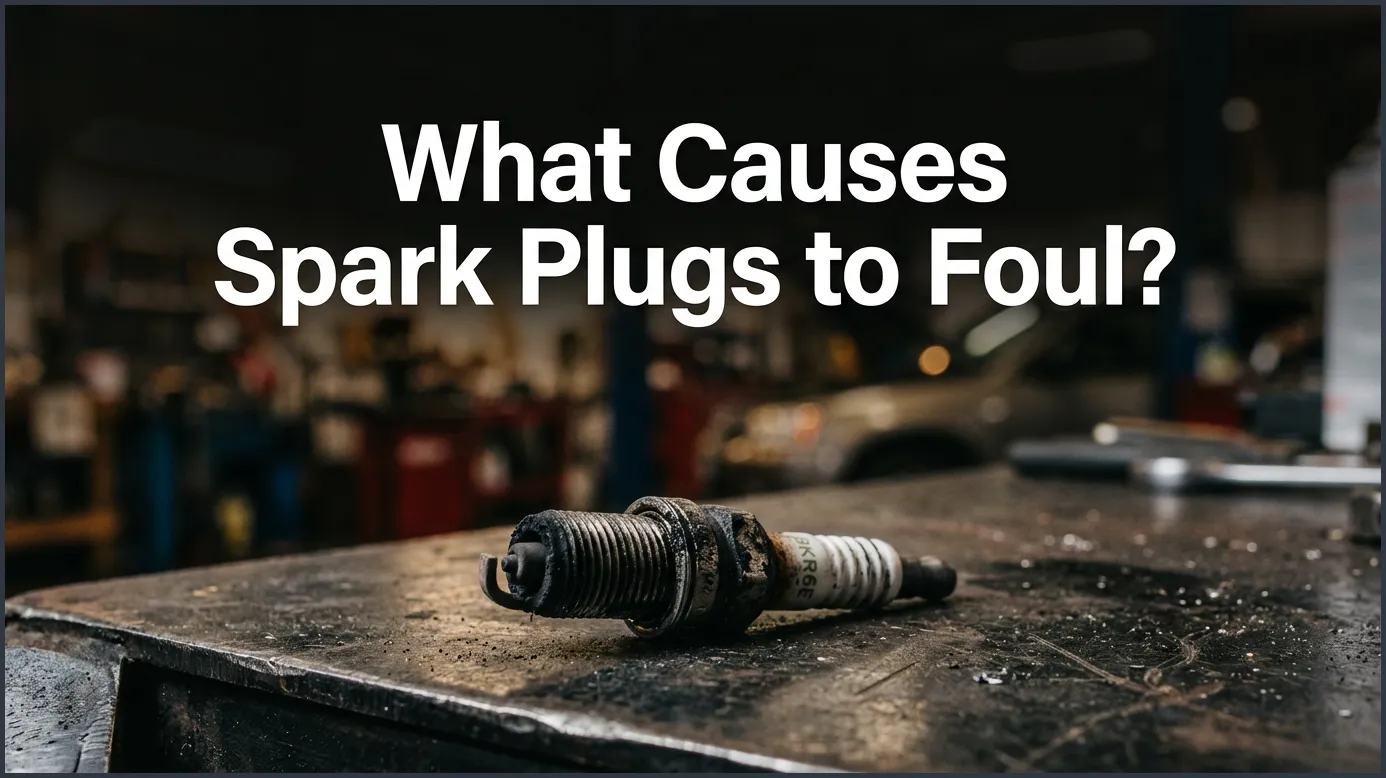
Spark plug fouling occurs when oil, fuel, or carbon deposits coat the plug tip, preventing it from producing a strong spark. This common engine issue is typically caused by oil leaks, an overly rich fuel mixture, or worn engine parts. Understanding these causes helps you prevent engine misfires, poor fuel economy, and costly repairs down the road.
Imagine pulling onto a busy highway, pressing down on the gas pedal, and feeling your car stumble and shake instead of accelerating smoothly. That sinking feeling in your stomach is all too common for many drivers. Often, this annoying hesitation points back to a small, inexpensive, yet vital component resting deep inside your engine. Your spark plugs are the unsung heroes of your vehicle, working tirelessly to ignite the air-fuel mixture that keeps you moving down the road.
When these tiny components function properly, your engine hums like a well-tuned instrument. However, when they become dirty, coated, or “fouled,” your smooth ride can quickly turn into a bumpy, frustrating, and inefficient nightmare. To keep your vehicle running at its best, it helps to understand the underlying issues that trigger this problem. In this guide, we will explore the common reasons behind this automotive headache and show you how to keep your engine healthy.
Key Takeaways
- Carbon Fouling: Caused by too much fuel, a dirty air filter, or excessive engine idling.
- Oil Fouling: Occurs when engine oil leaks past worn piston rings or damaged valve guide seals.
- Wet Fouling: Happens when raw fuel floods the combustion chamber and coats the plug.
- Common Symptoms: Watch out for rough idling, engine misfires, hard starts, and bad gas mileage.
- Prevention: Routine maintenance, replacing filters, and choosing the correct plug heat range will keep plugs clean.
📑 Table of Contents
What is Spark Plug Fouling?
Before we look closely at what causes spark plugs to foul, it helps to understand what a spark plug actually does. Inside your engine, the spark plug has one main job. It must send a strong electrical current across a tiny gap at its tip. This spark ignites the fuel and air mixture, creating the mini-explosions that power your car. For this spark to jump successfully, the tip of the plug must remain clean and dry.
Fouling occurs when foreign substances build up on the spark plug tip. These substances can include unburned fuel, engine oil, or black carbon soot. When this buildup covers the firing tip, it acts as an insulator. Instead of jumping across the gap to create a spark, the electrical current flows down the side of the plug and escapes. This results in a weak spark or no spark at all, which mechanics refer to as an engine misfire. Learning how to read spark plugs by looking at their color and texture is the best way to diagnose exactly what is happening inside your combustion chambers.
Dry Carbon Fouling: The Fuel Problem
One of the most frequent answers to what causes spark plugs to foul is dry carbon fouling. If you pull a spark plug out and find it coated in a dry, fluffy, black soot, you are dealing with carbon buildup. This happens when the engine runs too “rich,” meaning there is too much fuel and not enough oxygen in the combustion chamber.
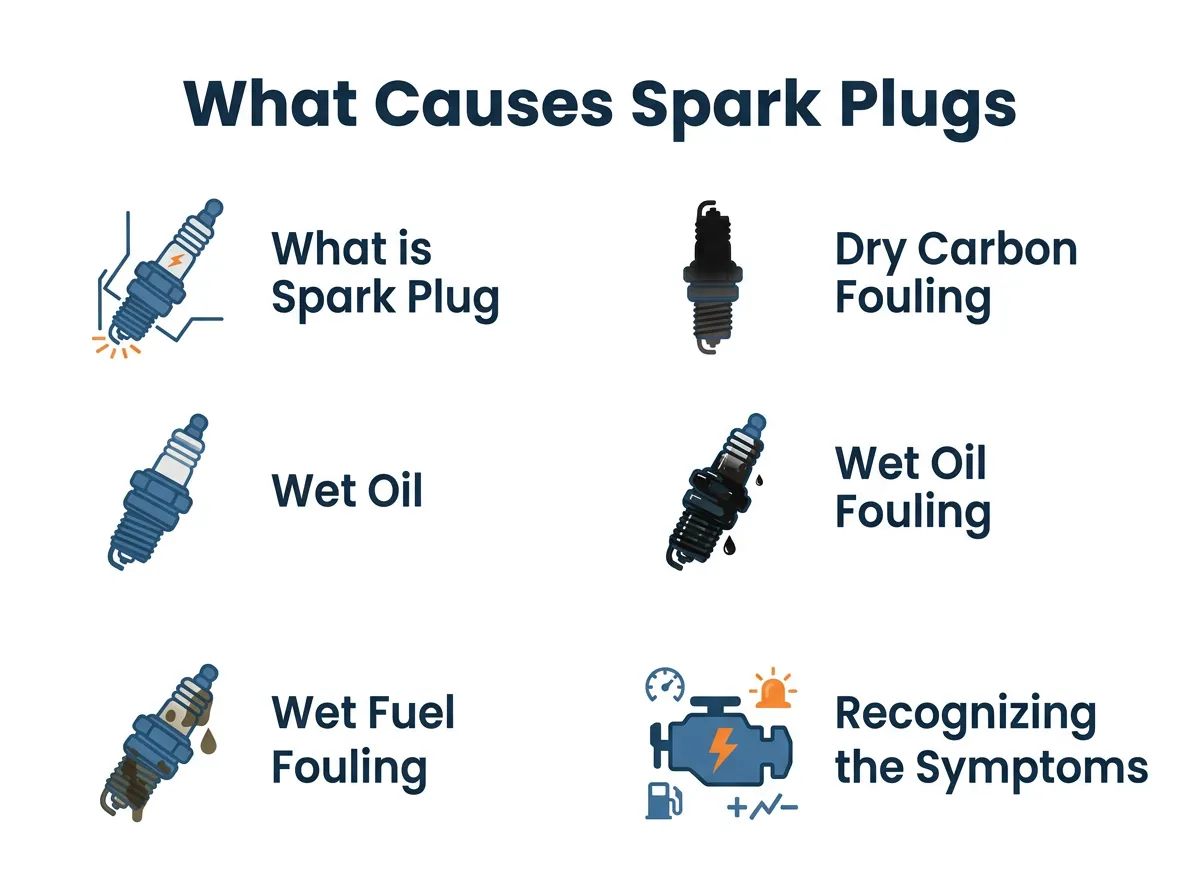
What Causes Spark Plugs to Foul? — key points at a glance
Air-Fuel Ratio Imbalance
For your engine to burn fuel cleanly, it needs a precise ratio of air to gasoline. If your air filter is clogged with dirt, your engine cannot breathe. This lack of air forces the engine to burn a highly concentrated mixture of fuel. The extra fuel does not burn completely, leaving behind a layer of black carbon soot on your plugs. A faulty oxygen sensor or a stuck-open fuel injector can also trick your car’s computer into dumping way too much fuel into the cylinders.
Short Commutes and City Driving
Your driving habits can also contribute to dry carbon fouling. Spark plugs are designed to operate within a specific temperature range. When they reach their optimal operating temperature, they actually clean themselves by burning off minor carbon deposits. However, if you only drive your car on very short trips to the local store, the engine never warms up fully. This prevents the plugs from reaching their self-cleaning temperature, allowing carbon to stack up day after day.
Wet Oil Fouling: The Internal Leak
If you pull your spark plugs and find them covered in a thick, wet, shiny black substance, you are dealing with oil fouling. Unlike carbon fouling, which is usually a fuel or air problem, oil fouling is almost always a sign of a mechanical leak inside your engine. This is a more serious issue that requires your attention quickly.
Worn Piston Rings
Inside your engine, pistons move up and down rapidly. To prevent oil from entering the combustion chamber, pistons are fitted with metal rings that scrape excess oil off the cylinder walls. Over time, these piston rings can wear out or get stuck. When this happens, engine oil slips past the rings and enters the combustion chamber. The intense heat burns some of the oil, but the rest coats your spark plugs in a sticky, oily film that quickly kills the spark.
Damaged Valve Guide Seals
Another common source of oil leaks is the cylinder head. Your engine valves control the flow of air and exhaust. These valves have rubber seals to prevent oil in the top of the engine from dripping down into the cylinders. If these seals dry out, crack, or break, gravity pulls the oil straight down onto your spark plugs. If you notice a cloud of blue smoke from your exhaust when you first start your car in the morning, bad valve seals are a highly likely culprit.
Wet Fuel Fouling: The Flooded Engine
Sometimes, spark plugs are wet, but not with oil. If you pull a plug and it smells strongly of raw gasoline, you are looking at wet fuel fouling. This occurs when the combustion chamber is completely flooded with unburned gasoline, drowning the spark plug before it has a chance to light up.
Over-Fueling and Starting Failures
Wet fuel fouling often happens when you try to start your car repeatedly without success. Each time you turn the key, the fuel injectors spray gasoline into the cylinders. If the engine fails to catch, that fuel simply pools around the spark plug. Eventually, the plug becomes so soaked in gasoline that it cannot produce a spark at all. In this situation, the engine is considered “flooded.”
Weak Ignition System Components
In other cases, the fuel system is working perfectly, but the ignition system is failing to deliver enough electrical power. If your ignition coils, distributor cap, or spark plug wires are worn out, they will send a weak current to the plug. Because the current is too weak to create a hot spark, the fuel cannot ignite, leaving the plug wet and useless. If you want to know what to do next, checking the ignition system is a great starting point for resolving your engine issues.
Recognizing the Symptoms of Fouled Plugs
You do not always have to pull your spark plugs out to know they are dirty. Your vehicle will usually give you several clear warning signs. Recognizing these signs of bad or fouled spark plugs early can prevent you from getting stranded or facing expensive engine damage.
The most common symptom is a rough idle. When your car is parked or stopped at a red light, the engine should feel smooth. If the car vibrates, shakes, or makes a sputtering sound, your plugs are likely failing to fire consistently. You will also notice a significant drop in your fuel economy. Because fouled plugs do not burn fuel efficiently, your engine has to consume much more gasoline to keep the vehicle moving, forcing you to make frequent, expensive trips to the gas station.
How to Prevent Spark Plug Fouling
Fortunately, you do not have to be at the mercy of dirty plugs. Taking a proactive approach to vehicle maintenance is the key to preventing spark plug fouling and keeping your engine running smoothly for years to come.
First, always ensure you are using the correct spark plug heat range recommended by your vehicle manufacturer. A plug that runs too cold for your specific engine will fail to burn off normal deposits, leading to rapid carbon buildup. Second, replace your engine air filter regularly to maintain a healthy balance of air and fuel. Finally, do not ignore oil leaks. If you notice your car is consuming oil or blowing blue smoke, address the internal engine leaks before they ruin your brand-new spark plugs.
Conclusion
At the end of the day, knowing what causes spark plugs to foul gives you the power to protect your car and your wallet. Whether you are dealing with a dry carbon buildup from short city trips, sticky oil from worn internal seals, or wet gasoline from a flooded engine, these issues are warnings that your car needs some care. By keeping up with simple maintenance, changing your filters on time, and addressing engine issues early, you can enjoy a smooth, reliable, and fuel-efficient ride for many miles to come.
Frequently Asked Questions
What does a fouled spark plug look like?
A fouled spark plug typically looks black and dirty rather than light tan or gray. Depending on the cause, it might be covered in dry, soot-like carbon, coated in wet, sticky engine oil, or soaked in raw gasoline.
Can you clean a fouled spark plug?
Yes, light carbon fouling can often be cleaned with a wire brush and some spark plug cleaner. However, if the plug is heavily oil-fouled or worn out, it is much safer and more reliable to replace it with a new one.
How long should spark plugs last?
Standard copper spark plugs typically last between 30,000 and 50,000 miles. Premium iridium or platinum spark plugs are much more durable and can easily last between 80,000 and 100,000 miles under normal driving conditions.
Will a fouled spark plug cause a check engine light?
Yes, a fouled spark plug will cause the engine to misfire, which almost always triggers the check engine light. The onboard computer will usually store a misfire code, such as P0300, indicating a problem in the cylinders.
Can driving with a fouled spark plug damage the engine?
Yes, driving with a fouled plug can cause unburned fuel to enter the exhaust system. This raw fuel can melt the internal components of your expensive catalytic converter and cause long-term damage to your engine valves.
Does idling cause spark plugs to foul?
Yes, excessive idling can cause spark plugs to foul because the engine does not reach its hot, self-cleaning temperature. This allows normal carbon deposits to build up on the plug tip instead of being burned away.
