


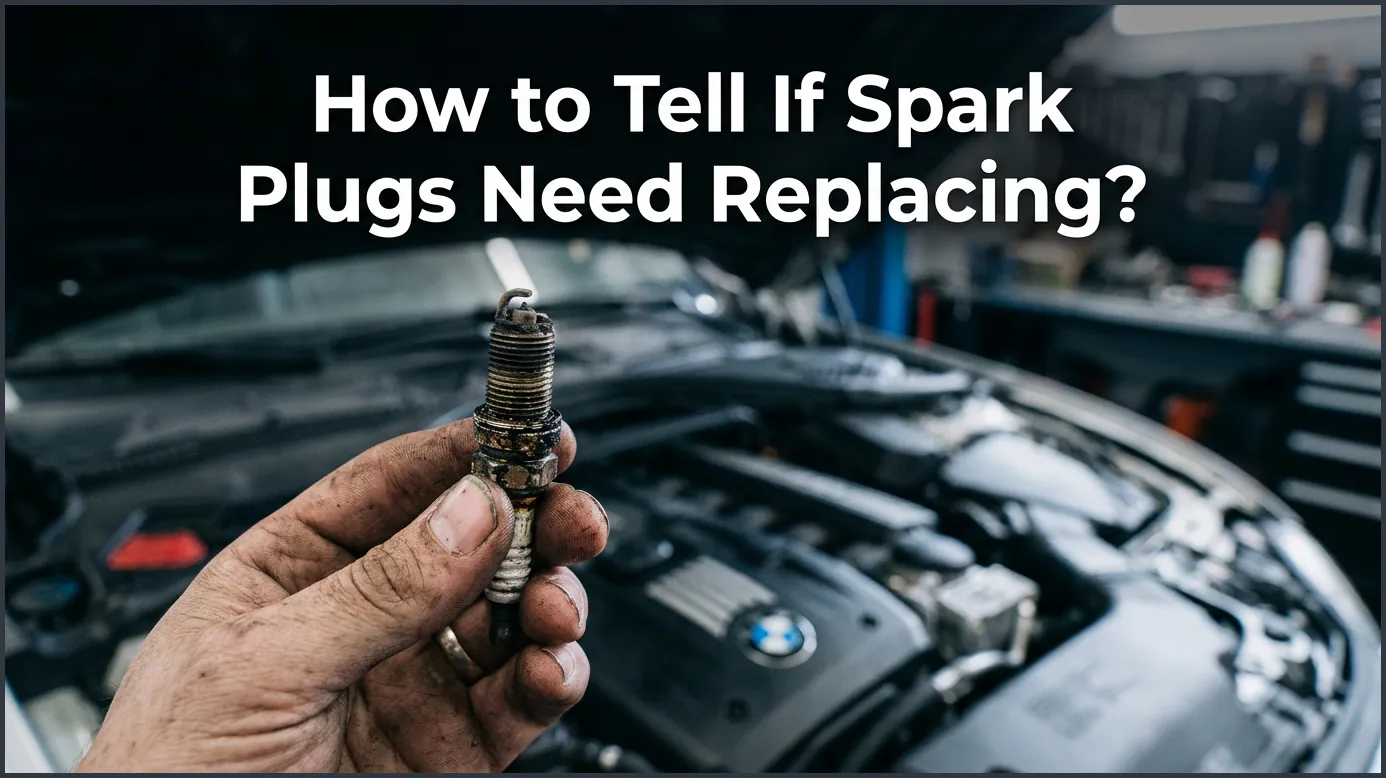
If your car struggles to start, shakes while idling, or gets poor gas mileage, your spark plugs may be worn out. Common signs also include engine misfires and slow acceleration. Replacing these cheap parts quickly will protect your engine and restore smooth performance.
Imagine this. You get into your car on a cold day. You turn the key. The engine makes a loud, slow noise, but it does not start. It feels very weak. You try one more time. It finally starts, but the whole car shakes. Why does it feel so bad? The issue might be very small. It could be a tiny part that is cheap to fix. Yes, we are talking about your spark plugs.
These little metal plugs do a giant job for your car. They keep your engine running smooth and strong. But like any other part, they wear out over time. When they do, they can cause a lot of stress. You might worry that your engine is dying. In reality, you might just need a simple swap.
In this guide, we will explore the main signs of bad plugs. You will learn how to tell if spark plugs need replacing before you get stuck on the road. We will cover the symptoms, visual checks, and quick tips to keep your car in top shape.
Key Takeaways
- Rough Idling: If your car vibrates or makes choppy noises when stopped, your plugs may be failing.
- Hard Starts: Worn plugs struggle to create the spark needed to start the engine, which drains your battery.
- Engine Misfires: A sudden stumble or jerk while driving is a clear sign of ignition issues.
- Poor Gas Mileage: Old plugs do not burn fuel fully, which can waste up to 30 percent of your gas.
- Visual Wear: Physical signs like black soot, oily tips, or melted metal show it is time for new plugs.
- Simple Fix: Replacing spark plugs is a cheap and easy way to prevent major engine damage.
📑 Table of Contents
What Are Spark Plugs and Why Do They Matter?
The Spark of Life
Your car runs on gas and air. But these two things cannot explode on their own. They need a spark to start the fire. Spark plugs sit at the top of your engine cylinders. They send a tiny bolt of electricity across a small gap. This spark lights the fuel. The heat creates power, and that power moves your car. Without a strong spark, your car is just a heavy metal box.
How Long Do They Last?
Spark plugs are tough. They face extreme heat and pressure every single second. But they do not last forever. Most standard plugs last about 30,000 miles. Some high-end plugs made of iridium can go for 100,000 miles. You should always check your owner’s manual first. But knowing how often to change spark plugs helps you avoid sudden breakdowns. When they wear down, the gap between the metal tips gets too wide. Then, the spark cannot jump, and your engine starts to struggle.
Six Warning Signs of Worn Spark Plugs
1. Your Engine Is Idling Rough
When your car sits at a red light, it should feel smooth. It should make a quiet, steady hum. If the car vibrates, your plugs might be old. You might feel the steering wheel shake in your hands. You might hear a low, choppy sound from under the hood. This is called a rough idle. It happens because the fuel is not burning at the exact right time. It makes the engine work much harder than it needs to.
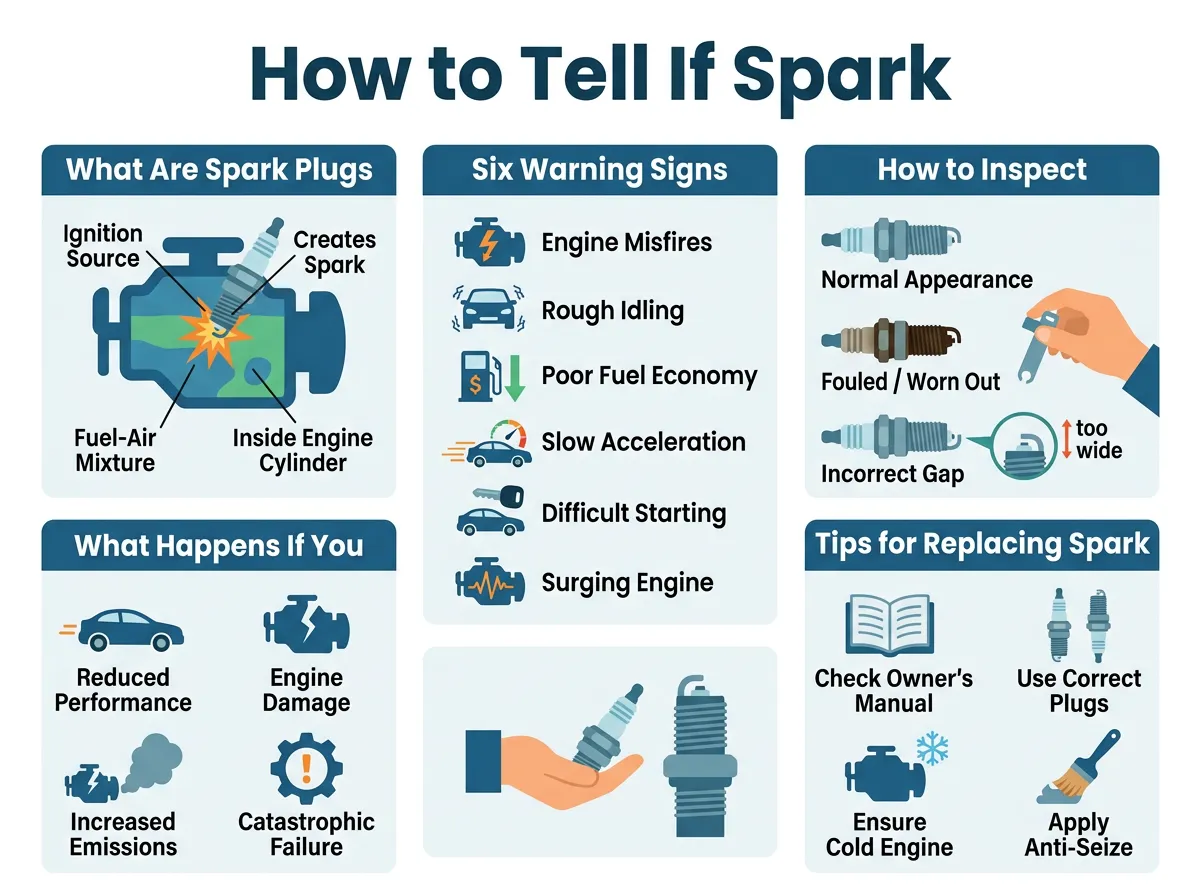
How to Tell If Spark Plugs Need Replacing? — key points at a glance
2. You Have Trouble Starting Your Car
Many people blame a dead battery when a car will not start. But bad spark plugs are also a common cause. If your plugs cannot make a spark, your engine will just crank. This uses up a lot of battery power. Soon, your battery will die too. If starting your car feels like a chore every morning, it is time to check your plugs.
3. The Engine Misfires
Have you ever felt your engine hesitate or stumble for a split second? This is an engine misfire. It means a cylinder missed its turn to burn fuel. This can cause a sudden jerk when you drive. It makes your car feel weak and slow. Over time, misfires can damage other expensive parts. Reading up on how spark plugs affect engine health can help you see why fast action is key.
4. You Are Visiting the Gas Station More Often
Are you spending too much on gas lately? Worn plugs do not burn fuel fully. Some gas goes to waste. It gets pushed out of the exhaust pipe instead of making power. This can drop your fuel economy by up to 30 percent. New plugs will pay for themselves very quickly in gas savings alone.
5. Slow Acceleration
Pressing the gas pedal should make your car go instantly. If you press the pedal and nothing happens for a moment, you have poor acceleration. The engine feels laggy. This is very dangerous when you need to merge onto a fast highway. Learn more about the critical signs of bad spark plugs so you can stay safe on the road.
6. Your Check Engine Light Is On
Modern cars have smart computers. They watch every part of the engine. If a spark plug misfires, the computer knows. It will turn on the check engine light on your dashboard. Do not ignore this light. A simple scan can tell you if a spark plug is the issue.
How to Inspect Your Spark Plugs Visually
Looking for Black Carbon
If you are handy, you can pull a plug out to look at it. A healthy plug has a light tan or grey color. If the tip is covered in black soot, you have a problem. This soot is carbon. It blocks the electrical spark and makes the plug weak.
Checking for Oil and Melted Tips
Is the plug wet with oil? This means you have an oil leak inside your engine. The plug must be replaced, and the leak must be fixed. Also, look at the metal tip. If the tip is worn down, rounded, or melted, the spark cannot jump the gap. These physical signs prove that your spark plugs need to be replaced right away.
What Happens If You Ignore Worn Plugs?
Catalytic Converter Damage
When a plug misfires, raw fuel flows into the exhaust system. This fuel ends up in your catalytic converter. The converter gets extremely hot. The raw fuel will burn inside it and melt the parts. Replacing a catalytic converter can cost thousands of dollars. A cheap spark plug swap can prevent this disaster.
Complete Engine Failure
Unburnt fuel can wash away the oil that coats your engine cylinders. Without oil, metal rubs on metal. This ruins your engine block. If you keep driving with bad plugs, you might need to buy a whole new engine. A little maintenance goes a long way.
Tips for Replacing Spark Plugs Yourself
Get the Right Tools
You do not need a big garage to do this job. You just need a socket wrench, a special spark plug socket, and a gap tool. The spark plug socket has a rubber insert. This holds the fragile plug so you do not drop or crack it.
Work on One at a Time
Engine wires must go to the exact right plug. If you mix them up, your engine will not run. To avoid this mistake, only replace one plug at a time. Remove the wire, swap the plug, and put the wire back. Then, move to the next one. This simple tip keeps the job stress-free.
Conclusion
Your spark plugs may be small, but they hold a lot of power. Knowing how to tell if spark plugs need replacing is a great skill for any car owner. If you notice a rough idle, poor fuel economy, or hard starts, do not wait. Check your plugs or visit a mechanic. Taking care of these small parts today will keep your car running smooth, safe, and efficient for years to come.
Frequently Asked Questions
How often should I replace my spark plugs?
Most standard spark plugs should be replaced every 30,000 miles. However, high-quality iridium or platinum plugs can last up to 100,000 miles. Always check your car owner’s manual for the exact schedule.
Can I drive with bad spark plugs?
Yes, you can drive for a short time, but it is not safe. Bad plugs cause engine misfires, which can ruin your catalytic converter and lead to costly engine damage. It is best to replace them as soon as you notice a problem.
Do bad spark plugs trigger the Check Engine light?
Yes, bad spark plugs often trigger the Check Engine light. When a plug fails, it causes a cylinder misfire, which your car’s computer will detect. Scanning the computer codes will help you pinpoint which plug is failing.
Will new spark plugs make my car faster?
New spark plugs will not make your car faster than its original design. However, they will restore lost power, improve throttle response, and make acceleration feel much smoother. It will feel like your car has regained its youth.
Should I replace all spark plugs at the same time?
Yes, you should always replace all spark plugs at once. Spark plugs wear out at a similar rate because they work together. Replacing only one can cause the engine to run unevenly and lead to performance issues.
Can bad spark plugs cause a car to shake?
Yes, worn spark plugs can cause your car to shake, especially when you are idling or stopped at a red light. This shaking happens because the engine is misfiring and running on uneven power. New plugs will quickly cure this vibration.
