


If your car struggles to start, vibrates while idling, or burns through fuel faster than usual, your spark plugs may be worn out. Ignoring these symptoms can lead to engine misfires and expensive damage over time. Replacing these small parts promptly is a simple, cost-effective way to restore your vehicle’s performance.
Imagine getting into your car on a cold, frosty morning. You turn the ignition key, but the engine just groans and struggles to find its rhythm. Or maybe you are cruising on the highway, and your car suddenly feels sluggish when you try to pass another vehicle. It is easy to blame a weak battery or think your transmission is slipping. However, the real culprit is often a set of tiny, inexpensive components hiding deep inside your engine.
Your vehicle relies on these small parts to keep everything running in perfect harmony. When they start to wear out, they send clear distress signals that you should not ignore. Understanding how to read these signs can save you from a major roadside breakdown. It can also keep plenty of hard-earned cash in your wallet by preventing costly repairs before they get worse. If you are wondering how to know when spark plugs are bad, you are in the right place.
In this guide, we will explore the major symptoms of worn ignition parts. We will look at what causes them to fail, how you can inspect them yourself, and when it is time to buy replacements. This simple, easy-to-understand knowledge will help you keep your ride running smoothly for years to come.
Key Takeaways
- Engine Misfires: A sputtering engine or a sudden loss of power often indicates a dirty or worn-out spark plug.
- Poor Fuel Economy: Worn plugs cannot burn fuel efficiently, which can drop your gas mileage by up to thirty percent.
- Rough Idling: If your car vibrates, rattles, or makes loud noises while sitting still, your plugs may be failing.
- Hard Starts: Crucial ignition issues, like struggling to start the engine, are frequently tied to bad spark plugs or failing wires.
- Slow Acceleration: If your car feels sluggish or fails to respond when you step on the gas, check your spark plugs.
- Visual Clues: Physical signs like black carbon buildup, melted electrodes, or ash on the plug tip show it is time for a change.
📑 Table of Contents
What Do Spark Plugs Actually Do?
To understand why your car acts up when these parts fail, it helps to know what they actually do. Your engine runs on a precise mix of air and gasoline. But this mixture cannot burn on its own. It needs a trigger to unleash its energy.
The Spark of Life
A spark plug fits into the top of each engine cylinder. Its main job is to create a tiny, hot bolt of electricity. This spark ignites the fuel and air mixture inside the cylinder. This mini-explosion pushes the piston down, which turns the crankshaft and eventually spins your car’s wheels. Without this spark, your engine simply cannot generate any power.
Keeping the Engine in Time
Timing is everything in a modern engine. The spark must happen at the exact microsecond when the fuel mixture is compressed. If the spark is too weak, too late, or does not happen at all, the combustion cycle falls out of sync. This disruption leads to a host of performance issues that you will feel instantly from the driver’s seat.
Top Warning Signs Your Spark Plugs Are Failing
If your engine is struggling, it will let you know. Paying attention to these warning signs can prevent you from getting stranded on the side of the road.
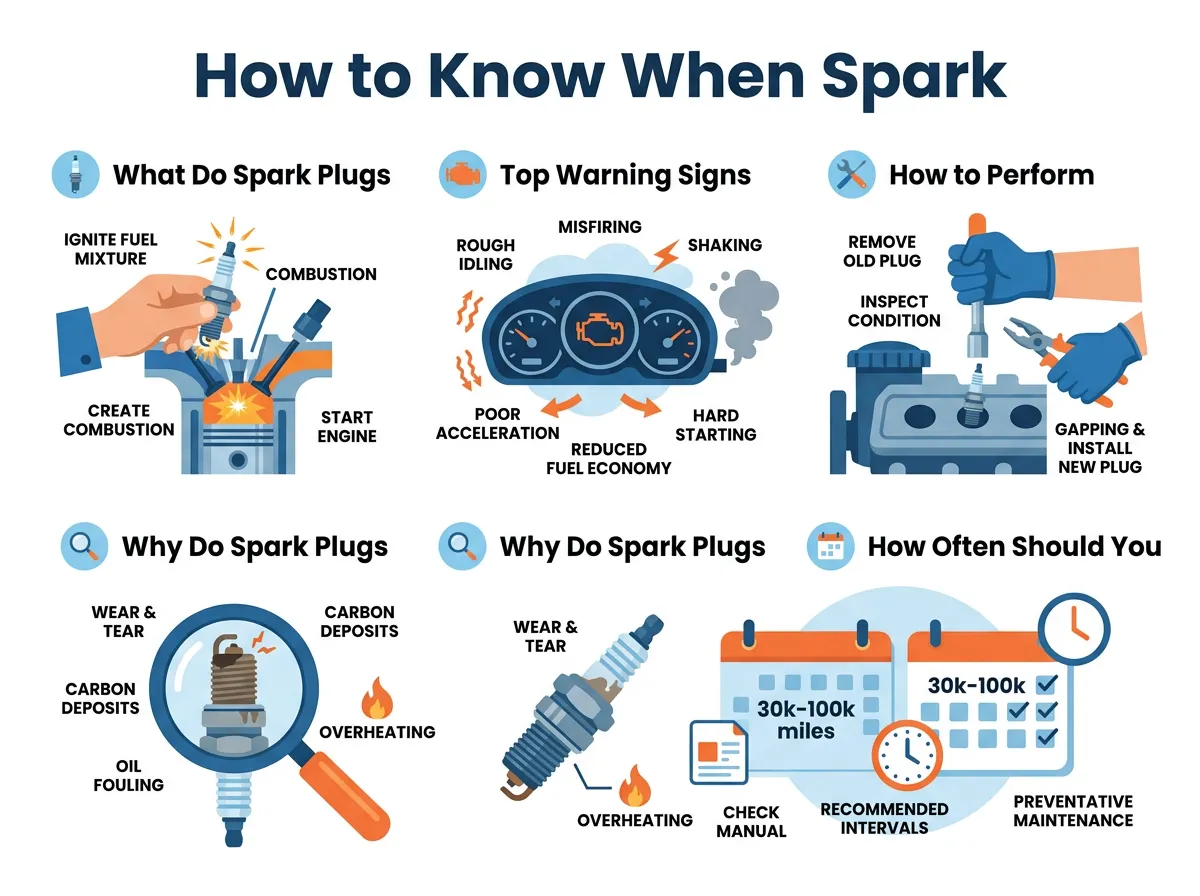
How to Know When Spark Plugs Are Bad? — key points at a glance
Your Engine Misfires or Hesitates
An engine misfire is one of the clearest warning signs of bad spark plugs. A misfire happens when a plug fails to ignite the fuel inside its cylinder. When this occurs, you will feel the car jerk or sputter for a brief moment. You might also notice a sudden drop in engine power. If this happens often, your check engine light will likely flash on your dashboard.
A Rough and Noisy Idle
When your car is parked or sitting at a red light, the engine should sound like a gentle, steady hum. If your plugs are bad, the engine might sound rough and uneven instead. You might feel the steering wheel vibrate in your hands, or hear a loud rattling noise coming from under the hood. This rough idle means the engine is working much harder than it needs to just to stay running.
High Fuel Consumption
Are you spending more money at the gas pump lately? Worn out parts might be the cause. When spark plugs do not burn fuel efficiently, unburnt gas escapes through the exhaust system. This means your engine has to consume more fuel to maintain the same speed. In fact, failing spark plugs drop your gas mileage by up to thirty percent, costing you extra money on every trip.
Trouble Starting Your Vehicle
Many drivers blame a dead battery when their car will not start. While the battery is often the issue, worn ignition parts are also common culprits. Dirty plugs cannot create the strong spark needed to get a cold engine going. If you have to turn the key multiple times or crank the engine for a long time before it catches, your plugs need immediate attention.
How to Perform a Visual Check on Your Spark Plugs
If you feel comfortable working under the hood, a quick physical inspection can tell you a lot. You will need a spark plug socket and a ratchet to remove them safely. Knowing how to know when spark plugs are bad just by looking at them can save you a trip to the shop.
Healthy vs. Unhealthy Plugs
Learning how to check spark plugs visually is a great skill for any car owner. A healthy plug will look clean and dry. The tip will usually have a light grey or light tan color. If the plug is unhealthy, you might see a thick layer of black soot, which indicates carbon buildup. If the tip is wet with oil, you might have a leaking engine seal that needs quick repair.
Physical Wear and Damage
Look closely at the metal electrode at the very tip of the plug. Over time, the constant electrical heat wears this metal down. If the electrode looks rounded, worn thin, or completely melted, the plug cannot create a strong spark. You should also check the white ceramic insulator. Any cracks in this ceramic will allow electricity to escape, causing misfires.
Why Do Spark Plugs Go Bad?
Like lightbulbs, these parts are not designed to last forever. They operate under extreme heat and pressure every single second the engine runs.
Normal Wear and Tear
Every time a plug fires, a tiny amount of metal wears away from the tip. Over thousands of miles, the gap between the electrodes grows wider. A wider gap requires more electrical voltage to jump across. Eventually, your car’s ignition system cannot supply enough voltage, and the plug stops firing regularly.
Oil and Carbon Buildup
If your engine burns oil or runs on a fuel mixture that is too rich, black deposits will coat the plug tip. This coating acts like an insulator. It blocks the electrical current from jumping the gap, leading to weak sparks and engine hesitation.
How Often Should You Replace Your Spark Plugs?
Preventative maintenance is the key to keeping your vehicle healthy. You do not have to wait for your car to break down before you change these parts.
Standard vs. Premium Plugs
The replacement timeline depends on the type of metal used in the plug. Older cars often use copper plugs, which typically last around thirty thousand miles. Modern vehicles usually come with platinum or iridium plugs. These premium materials are highly durable and can easily last up to one hundred thousand miles. Following standard spark plug replacement intervals keeps your engine running at peak efficiency.
Refer to Your Owner’s Manual
Every vehicle is different. The best way to know when to change your plugs is to read your owner’s manual. It will give you the exact mileage intervals recommended by the manufacturer. If you drive in harsh conditions, such as heavy stop-and-go traffic or extreme cold, you may need to replace them sooner.
Conclusion
Your car’s spark plugs may be small, but they play a massive role in how your vehicle performs. From starting your engine in the morning to keeping your fuel costs low, they are the unsung heroes of your engine bay. By keeping an eye out for rough idling, engine misfires, and poor gas mileage, you can catch failing plugs before they cause serious trouble. A quick visual inspection or a timely trip to your local mechanic will keep your car running smooth, reliable, and strong for the road ahead.
Frequently Asked Questions
What happens if I do not change bad spark plugs?
If you ignore bad spark plugs, your engine will continue to misfire, which can cause unburnt fuel to damage your catalytic converter. Over time, this can lead to complete engine failure and incredibly expensive repairs. It is always cheaper to replace the plugs early.
Can bad spark plugs cause a check engine light to turn on?
Yes, bad spark plugs frequently trigger the check engine light on your dashboard. When a plug fails, the engine computer detects a misfire in that cylinder and alerts the driver. A mechanic can read the error code to find out exactly which plug is causing the issue.
Do I need to replace all spark plugs at the same time?
Yes, you should always replace all your spark plugs at the same time. Since they wear out at similar rates, replacing only one means the others will likely fail soon after. Changing them as a set ensures your engine runs evenly and smoothly.
Can I drive my car with bad spark plugs?
While you can technically drive with bad spark plugs, it is not safe or recommended. Driving with a misfiring engine can damage other engine parts, cause sudden power loss, and significantly lower your fuel economy. It is best to fix the issue as soon as possible.
Why is my new spark plug covered in oil?
If you find oil on your spark plugs, it is usually a sign of a leaking valve cover gasket or worn engine seals. The oil leaks from the top of the engine and pools in the spark plug wells. You must fix the oil leak before installing new plugs, or they will fail quickly.
How much does it cost to replace spark plugs?
The cost to replace spark plugs typically ranges from one hundred to three hundred dollars, depending on your vehicle and labor rates. The plugs themselves are very cheap, often costing under ten dollars each. If you do the work yourself, it is one of the most affordable maintenance tasks you can perform.
