


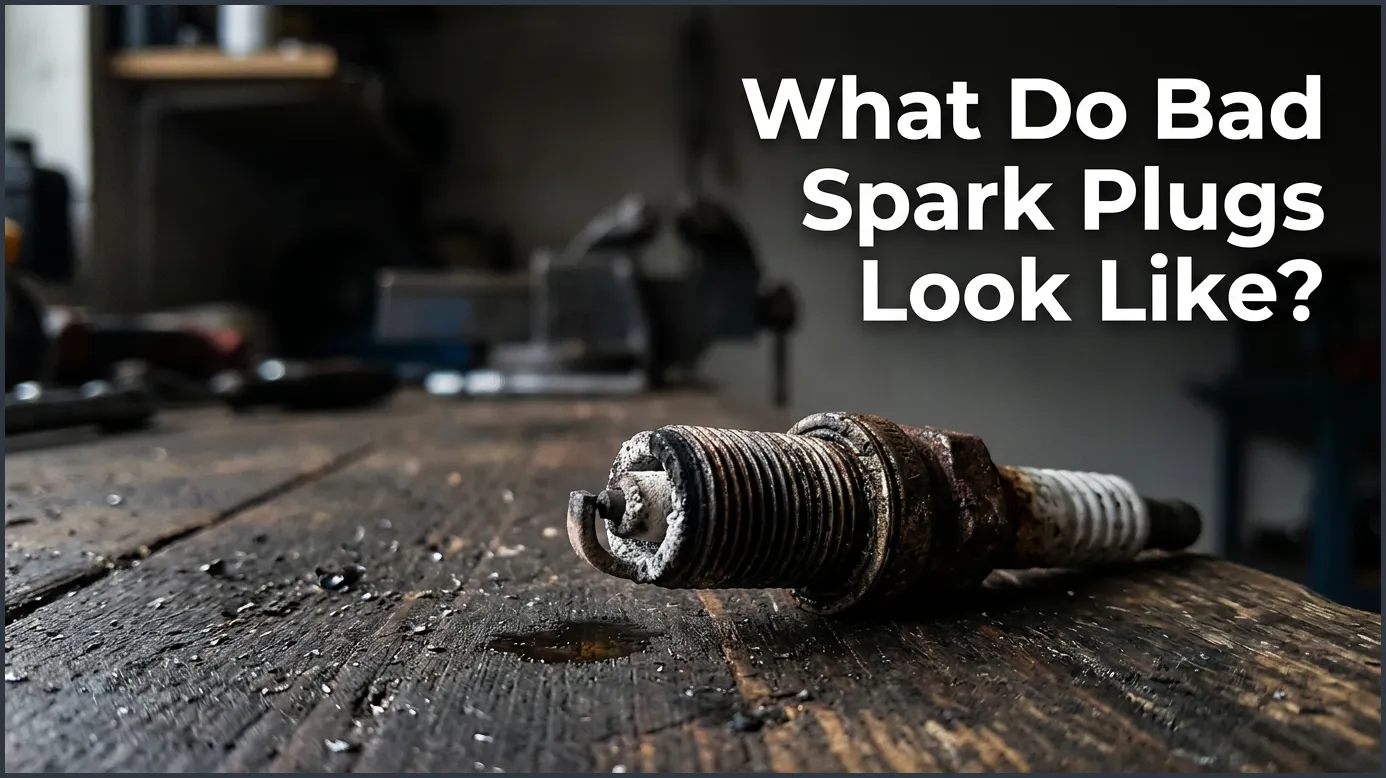
Bad spark plugs usually show clear signs of wear, such as black carbon deposits, oily residue, melted electrodes, or cracked ceramic casings. If your spark plugs look physically damaged, blistered, or covered in wet fuel, they are failing and need immediate replacement. Checking these visual cues helps you diagnose engine trouble before it leads to costly repairs.
Imagine driving down the highway when your car suddenly begins to jerk. The engine feels sluggish, and the check engine light flashes on your dashboard. You might worry about a major engine failure, but the culprit could be something much smaller and simpler to fix. Your engine relies on tiny, powerful components to ignite the fuel-air mixture inside the cylinders. When these components fail, your entire drive suffers. Inspecting them is the best way to see how your engine is performing internally.
If you are suspecting ignition trouble, you are likely asking yourself: what do bad spark plugs look like? Looking at these small metal parts can tell you a deep story about the health of your engine. In this guide, we will walk you through the visual warning signs of worn plugs. We will cover everything from oily tips to melted metal, giving you the knowledge to diagnose your car like a pro. Let’s dive into what makes a spark plug healthy and what signals a trip to the auto parts store.
Key Takeaways
- Carbon Fouling: A dry, black soot on the plug tip indicates a fuel-heavy air mixture or ignition issues.
- Oil Wetness: Wet, oily spark plugs point to leaking valve guides, piston rings, or cylinder damage.
- Overheating Signs: Blistered white insulators or melted electrodes mean the spark plug is running too hot.
- Physical Wear: A rounded center electrode or widened gap occurs naturally over time and reduces spark efficiency.
- Ash Accumulation: Light brown deposits from fuel additives can mask the spark and cause engine misfires.
- Easy Fixes: Learning to read your spark plugs can save your catalytic converter and boost fuel economy.
📑 Table of Contents
The Standard Look of a Healthy Spark Plug
Before we dive into the bad, we need to know what looks good. A healthy plug has a very specific, clean appearance. It should look dry and relatively free of heavy debris. When you pull a healthy plug out of the cylinder, you will notice a light tan, gray, or light brown color on the tip of the ceramic insulator. This light coloration is normal and shows that your engine is burning fuel properly.
The metal electrodes on a healthy plug should not show signs of heavy wear. They will have sharp, clean edges, and the gap between them will match your car’s factory settings. Seeing this clean look means your engine is burning fuel efficiently. Your air-to-fuel ratio is right where it needs to be, and your engine is running at the correct temperature. Understanding this healthy appearance helps you answer what do bad spark plugs look like when you pull out a damaged one.
What Do Bad Spark Plugs Look Like? Visual Signs to Spot
When a spark plug goes bad, it changes color, texture, and shape. Each type of damage tells a different story about your engine. Here are the most common visual signs you will find when you inspect your plugs.
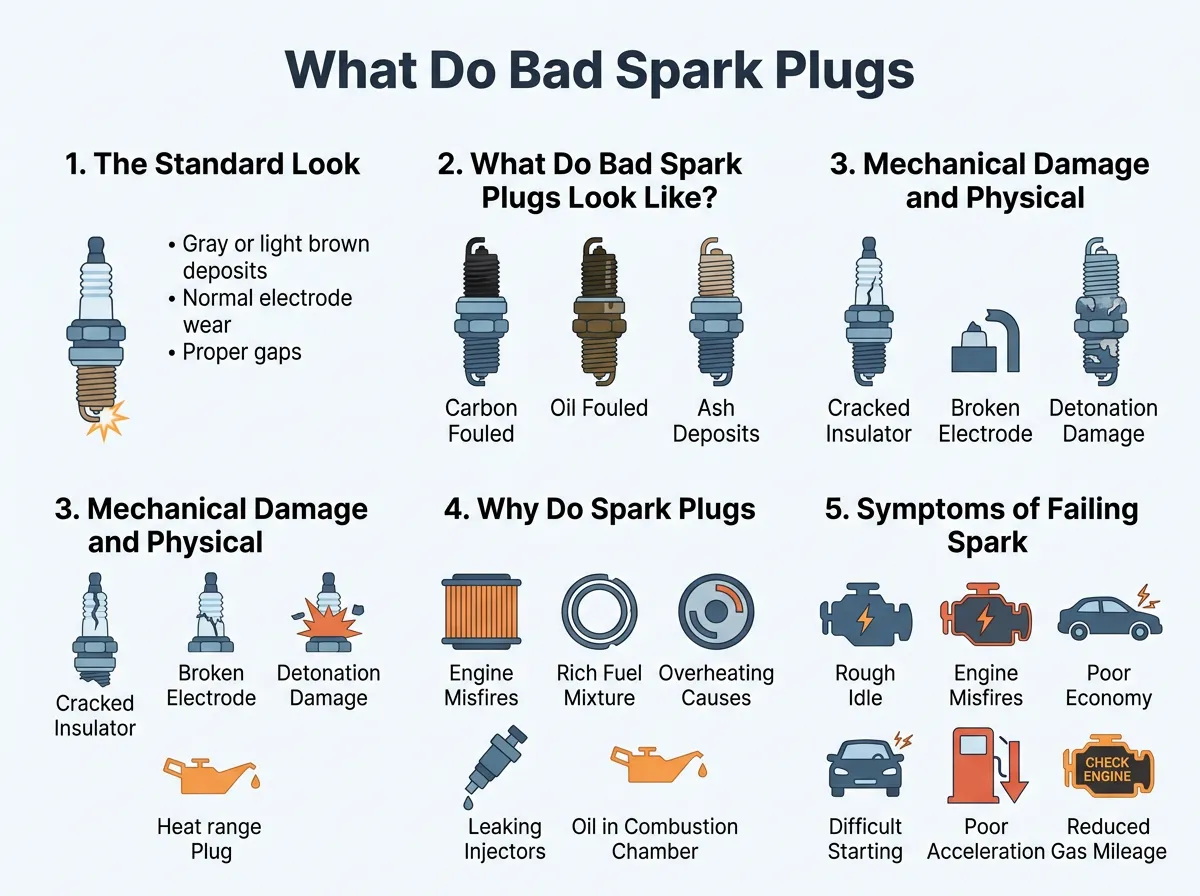
What Do Bad Spark Plugs Look Like? — key points at a glance
Carbon-Fouled Spark Plugs
A carbon-fouled plug is incredibly easy to spot. It is covered in dry, matte-black soot. This black coating covers the entire tip, including the ceramic insulator and the electrodes. What causes this look? It usually happens when your engine runs rich, meaning there is too much fuel and not enough air in the cylinders. The carbon acts as an insulator, blocking the electrical current. This leads to weak sparks and constant engine misfires.
Oil-Fouled Spark Plugs
An oil-fouled plug looks shiny, wet, and black. Unlike dry carbon, this plug is coated in actual engine oil. This is a clear sign of a mechanical issue inside your engine rather than a simple fuel mixture problem. Oil is leaking into the combustion chamber where it does not belong. This leak often comes from worn piston rings or a failing valve cover gasket. When oil coats the tip of the plug, it prevents the electricity from creating a spark at all. If you are asking what do bad spark plugs look like when there is a mechanical leak, this wet, oily appearance is your answer.
Melted or Blistered Spark Plugs
What do bad spark plugs look like when they overheat? They will look blistered or melted. The white ceramic tip might have a bubbly, white glaze, or the metal electrodes may be completely melted away or rounded off like melted candle wax. This happens when the plug is exposed to extreme, unregulated heat inside the cylinder. It can be caused by engine knocking, a lean fuel mixture, or using a plug with the wrong heat range.
Worn-Out Electrodes and Wide Gaps
Over time, the constant electrical sparks wear away the metal electrodes. A worn plug will have a rounded center electrode instead of a flat, sharp one. The ground electrode might also look thin, shaved down, and weak. Because the metal has worn away, the gap between the two electrodes becomes too wide. If the gap is too large, your ignition system has to work twice as hard to jump the distance, straining your ignition coils.
Ash-Contaminated Spark Plugs
If you see a light-colored, crusty buildup on the tip, you are looking at ash contamination. This buildup can look white, yellow, or light brown. It looks like a layer of dry crust stuck to the metal components. Many drivers wonder, what do bad spark plugs look like when additives build up? They often look crusty and gray. The ash comes from burning fuel additives or small amounts of engine oil over a long period. If the buildup gets too thick, it can mask the electrodes and prevent a clean spark.
Mechanical Damage and Physical Breakage
Sometimes, the damage to a plug is purely physical. This is often the most dangerous kind of damage because loose metal or ceramic pieces can fall directly into your engine cylinders, causing catastrophic failure.
Cracked Ceramic Insulators
The white ceramic portion of the plug is there to insulate the high-voltage electricity. If you see cracks, chips, or breaks in this ceramic, the plug is ruined. Electricity will escape through the cracks instead of jumping the gap, causing severe misfires. This physical damage can happen from improper installation tools, drop damage, or over-tightening.
Detonation and Chipped Tips
If the tip of your plug looks chipped, smashed, or physically flattened, your engine might be suffering from detonation. Detonation is an uncontrolled explosion inside the cylinder. This force can literally break the spark plug tip. If you see this, you need to address your engine timing immediately to prevent your pistons from cracking.
Why Do Spark Plugs Wear Out?
To prevent these issues, it helps to understand what causes them in the first place. Instead of just asking what do bad spark plugs look like, we should also look at why they wear out. Many drivers wonder what causes spark plugs to wear out over time. The primary culprit is simple wear and tear. Every time your engine runs, these plugs spark thousands of times per minute. The intense heat and electrical pressure naturally erode the metal over thousands of miles.
Other causes include poor fuel quality, neglected oil leaks, and incorrect engine tuning. Using the wrong type of fuel or letting your engine run too hot can drastically shorten the lifespan of your plugs. Regular maintenance is the best way to stop these issues before they start.
Symptoms of Failing Spark Plugs on the Road
You do not always have to pull the plugs out to know they are failing. Your car will give you clear warning signs while you are driving. If you notice a rough idle, poor acceleration, or a drop in your gas mileage, you might be dealing with ignition issues. You can read guides on how to tell spark plug is bad online to match your driving symptoms to plug wear.
Common symptoms include difficulty starting your car in the morning, an engine that vibrates or shakes when you are stopped at a red light, and a sudden increase in exhaust emissions. For more details, checking these 7 symptoms warning signs of bad spark plugs can help you pinpoint the issue before your vehicle leaves you stranded on the side of the road.
How to Keep Your Spark Plugs in Great Shape
Taking care of your spark plugs is one of the easiest ways to protect your engine and save money at the pump. Here are a few practical tips to keep them running well:
- Check them regularly: Inspect your plugs every 30,000 miles, even if you are not experiencing obvious performance problems.
- Use the correct gap: Always use a spark plug gap tool to verify the gap matches your car manual before installing new plugs.
- Keep up with oil changes: Clean oil and intact seals prevent the leaks that lead to oil-fouled plugs.
- Buy quality replacements: Avoid cheap, unbranded plugs. Stick to trusted OEM or high-quality iridium and platinum options.
Conclusion
Knowing what do bad spark plugs look like is a valuable skill for any car owner. By taking a few minutes to inspect your plugs, you can diagnose fuel system issues, oil leaks, and ignition problems early. Whether you spot dark carbon soot, wet oil, or melted metal, each sign points to a specific fix. Keep your plugs clean, replace them on schedule, and your engine will reward you with smooth, reliable performance for miles to come.
Frequently Asked Questions
How often should you replace spark plugs?
Most standard spark plugs need replacement every 30,000 to 50,000 miles. However, high-quality platinum or iridium plugs can last up to 100,000 miles. Always check your vehicle owner’s manual for the manufacturer’s recommended service interval.
Can bad spark plugs cause a check engine light?
Yes, worn or damaged spark plugs can cause your engine to misfire, which will trigger the check engine light. If you connect an OBD-II scanner, you will likely see codes ranging from P0300 to P0308. Replacing the bad plugs usually clears these codes and turns the light off.
Can you clean a bad spark plug instead of replacing it?
You can clean light carbon or ash deposits off a spark plug with a wire brush or specialized cleaner as a temporary fix. However, if the electrodes are melted, rounded, or physically damaged, cleaning will not help. It is always safer and more effective to install a new set of plugs.
What happens if you do not change bad spark plugs?
Ignoring bad spark plugs can lead to severe engine issues, including poor fuel economy, hard starting, and loud engine idling. Over time, unburnt fuel can flow into the exhaust system and destroy your expensive catalytic converter. It can also cause severe cylinder wear or mechanical engine failure.
Is it easy to replace spark plugs yourself?
For most vehicle models, replacing spark plugs is a straightforward DIY task that requires only a few basic tools. You will need a spark plug socket, an extension bar, and a torque wrench to ensure proper installation. Always make sure the engine is completely cool before you begin working on them.
How do I know if my spark plugs are loose?
A loose spark plug can cause a noticeable clicking or tapping noise coming from the engine bay while running. You might also experience a loss of engine power, rough idling, or a strong smell of exhaust gas. If left unchecked, a loose plug can damage the threads in the cylinder head.
